
Summary
- What is Dog Trekking?
-
Become a Dog Trekking Expert in 10 steps
- How to find the right trail for Dog Trekking?
- Is Dog Trekking suitable for your dog?
- Essential Gear Checklist for Dog Trekking
- Physical training for your dog
- Alternate excursions: using pulling gear or a long line/free
- Hydration & Nutrition
- Which commands should you teach your dog?
- Safety
- Adapt to the season
- Trail Etiquette
- Conclusion
- FAQ
What is Dog Trekking?
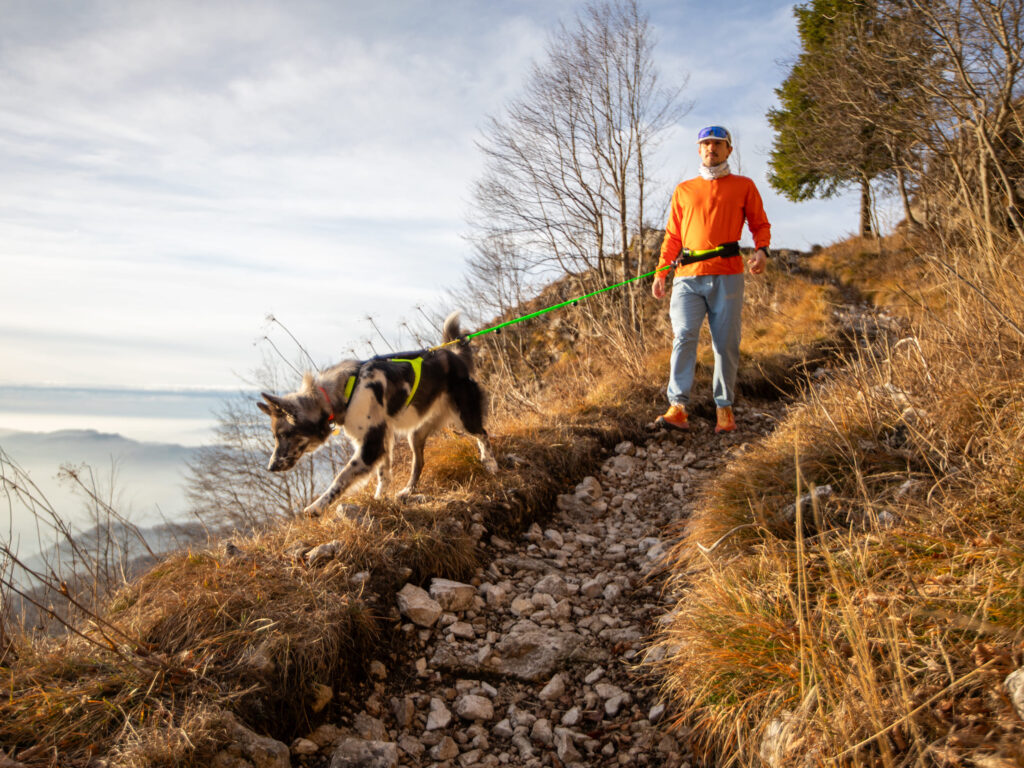
Dog Trekking is the most chilled and least physically demanding pulling activity you can do with your dog, making it accessible to a lot more doggy-human teams than other sports!
It simply means going on a hike with your dog and rather than having to hold on to their leash, a stretchy lead connects to a lightweight belt that you wear. It’s great for dogs because it allows them to naturally pull and lead the way and it’s great for you because it leaves your hands free.
Unlike faster sports, Dog Trekking is all about enjoying the trail, exploring nature together and giving your dog the opportunity to pull if they need an outlet for excess energy or enjoy it.
It’s a great activity to relax the mind and not be stressed about training issues such as recall or leash manners.
Become a Dog Trekking Expert in 10 steps!
1.
How to find the right trail for Dog Trekking?
To find trails suitable for dog trekking, you can use apps like AllTrails, Komoot, SityTrail or Wikiloc. You can also search online for “place name + trail“, ask locals for recommendations or simply go out and explore.
Online searches are especially helpful because they allow you to check the length and gradients of trails, which are important factors when choosing a trail that matches your expectations and fitness level.
You can also decide what type of route you prefer:
- Circular routes are great because they offer new scenery throughout the entire hike and usually require you to tackle any big hills just once.
- Out-and-back trails are ideal for beginners, as they give you the flexibility to turn around at any time without committing to walking the full distance.
- Point-to-point trails are interesting if you want to reach a new destination, including in various stages.
It’s also important to check certain things before you set off:
- Access to drinking water along the trail, so you can assess how much water to bring.
- The possible presence of livestock guardian dogs in mountain areas.
- Tide times if you’re near the ocean as high tide can cut off sections of beach trails.
- Local leash laws if you plan to let your dog off-leash.
Always check that your chosen trail is dog-friendly before you set off. There’s nothing worse than having to turn back because of dog-unfriendly situations such as challenging suspension bridges, very narrow paths or metal stairs/ladders.
2.
Is Dog Trekking suitable for your dog?
While Dog trekking is not the toughest pulling sport it is still a demanding activity, both physically and mentally.
Your dog needs to be physically fit enough for pulling. If your dog has joint sensitivities, this activity may not be suitable. Especially if you’re planning on tackling hills, as elevation gain and descent place significant stress on the body (on the joints and muscles). Since dog trekking is a high-impact activity, it’s always recommended that you consult your vet or an animal osteopath before getting started.
Just as importantly, make sure your dog actually enjoys the activity. For some dogs, pulling does not feel natural and being attached to a short elastic line can feel too restrictive. If your dog prefers calm walks and sniffing at their own pace, using a long line may be a better option.
3.
Essential Gear Checklist for Dog Trekking
This dog hiking gear checklist is quite exhaustive but of course it should be adapted to your own dog and needs!
→ Harness
An ergonomic harness is the most important piece of equipment for dog trekking. For pulling, the design must distribute pressure evenly across the dog’s body without restricting movement or breathing.
A well-designed pulling harness:
- Allows full shoulder extension
- Doesn’t put pressure on the neck and spine
- Doesn’t cause chafing
- Is lightweight and flexible
Harness X-Shirt, harness Scandinavia and harness X-Run all fit this criteria.
Learn more about pulling harnesses in our article “Pulling Harness – Guide”.
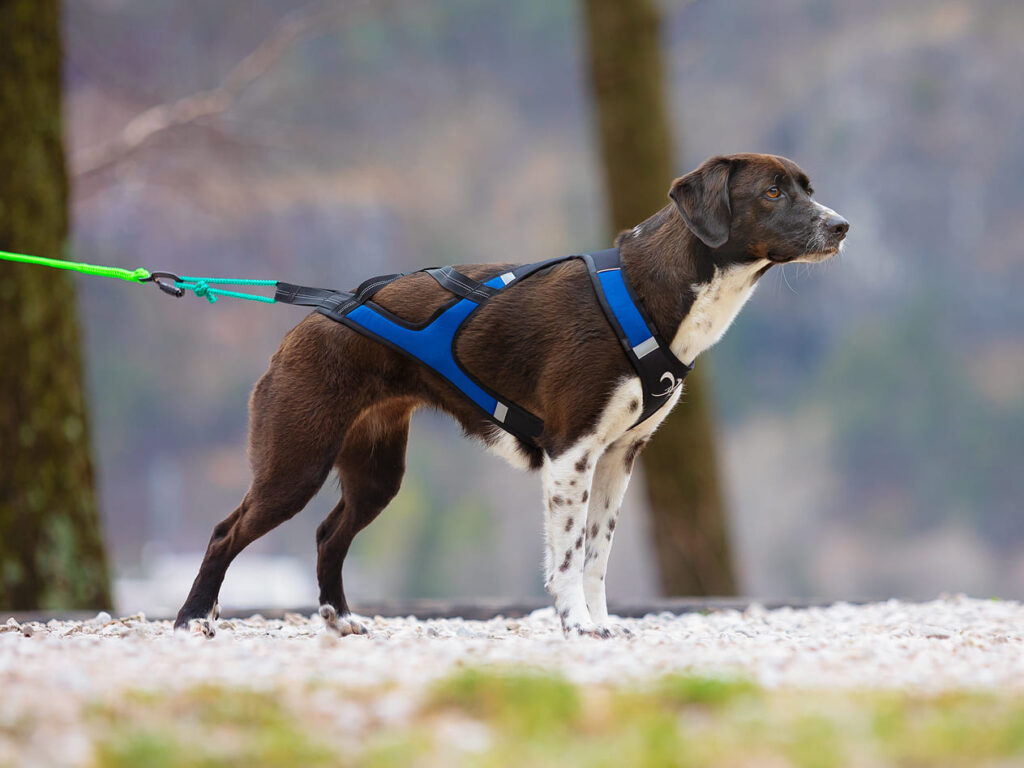
If your dog is sensitive, a safety harness can be a better option. It provides extra control and security while maintaining comfort. Our Harness Broad Peak is a great dog-trekking option.
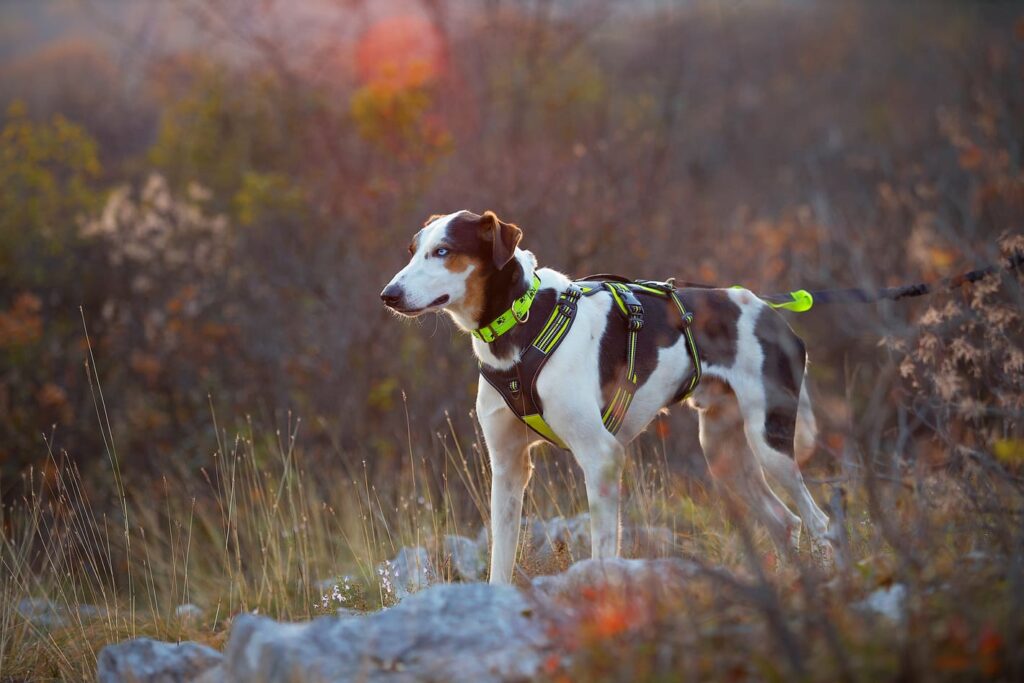
→ Elastic line/leash
The leash connecting you and your dog should include an elastic section. Elasticity absorbs shocks when your dog accelerates, slows down or changes direction. This protects your dog’s back and joints as well as your own lower back. Some lines are also designed to walk with two dogs at once.
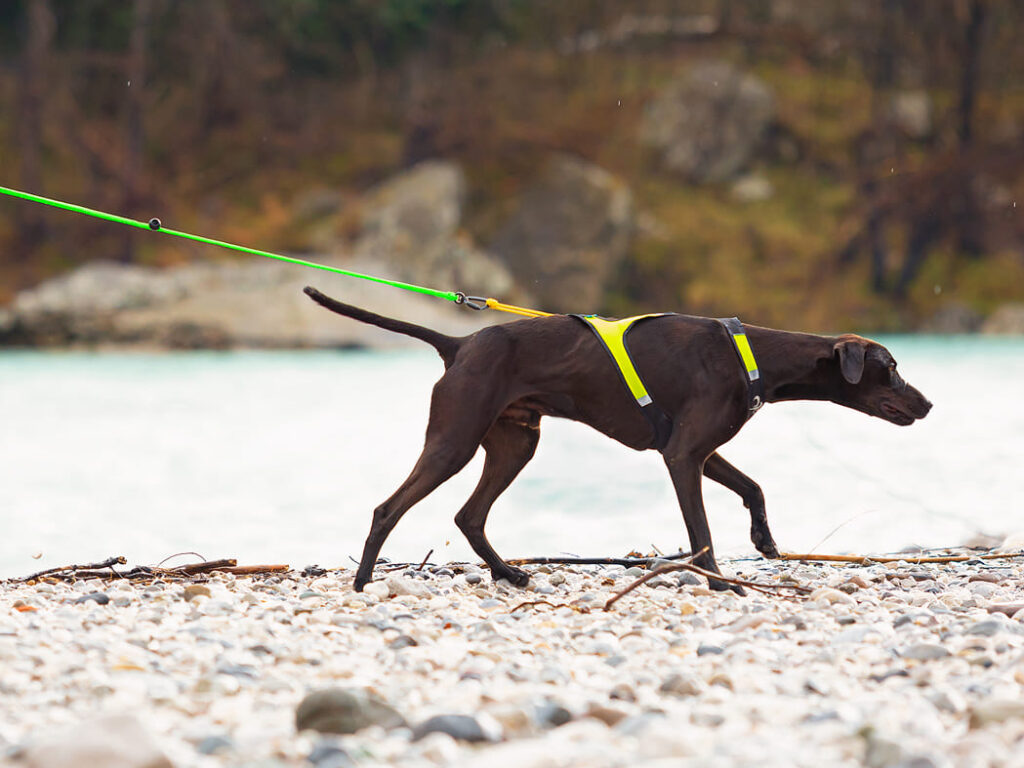
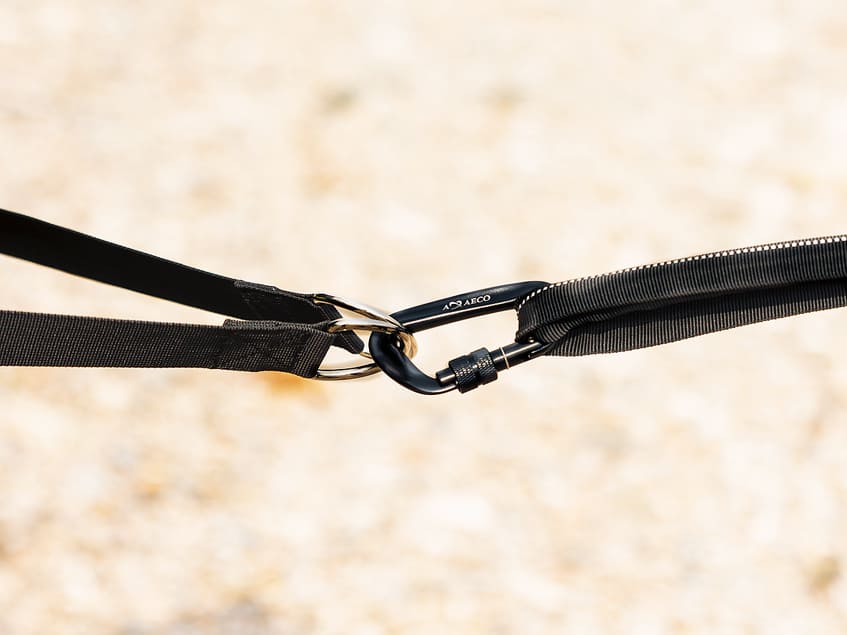
→ Carabiner
A strong, secure carabiner allows fast and safe attachment or detachment of the leash to your belt. Choose one that is durable and reliable, especially if you have a strong puller.
→ Belt
The belt you wear allows your dog to pull you efficiently. Comfort is essential, especially during longer treks.
There are different types of belts depending on your needs:
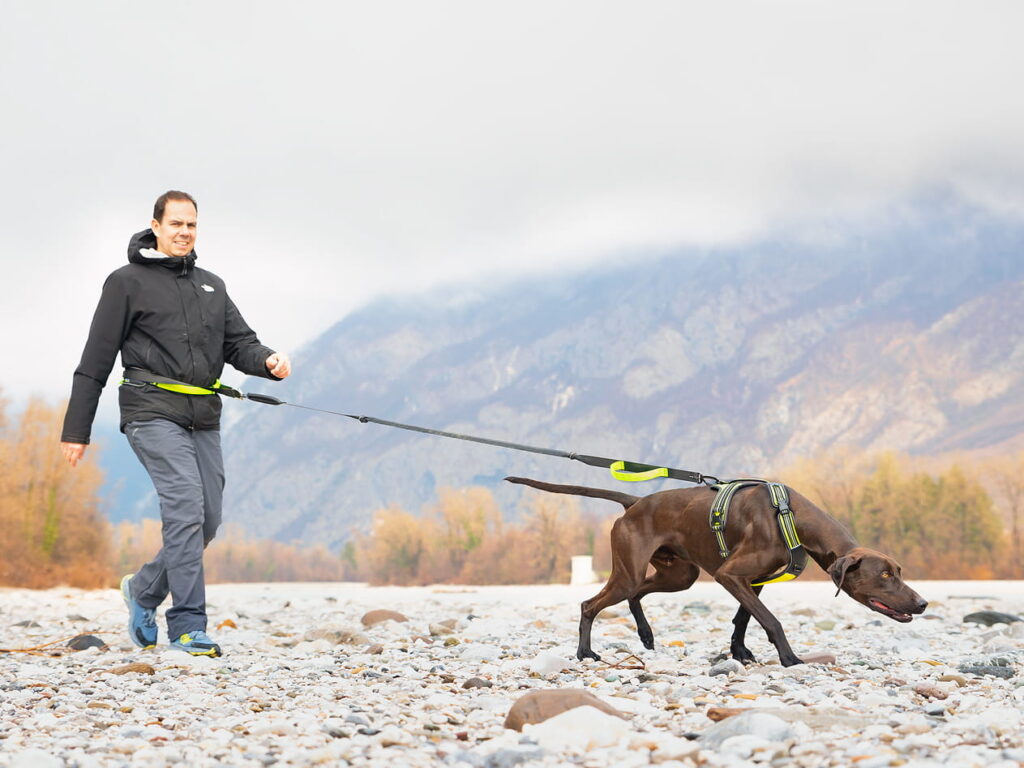
Trekking Belt
Choose this belt if you enjoy short trekking adventures or have a light puller.
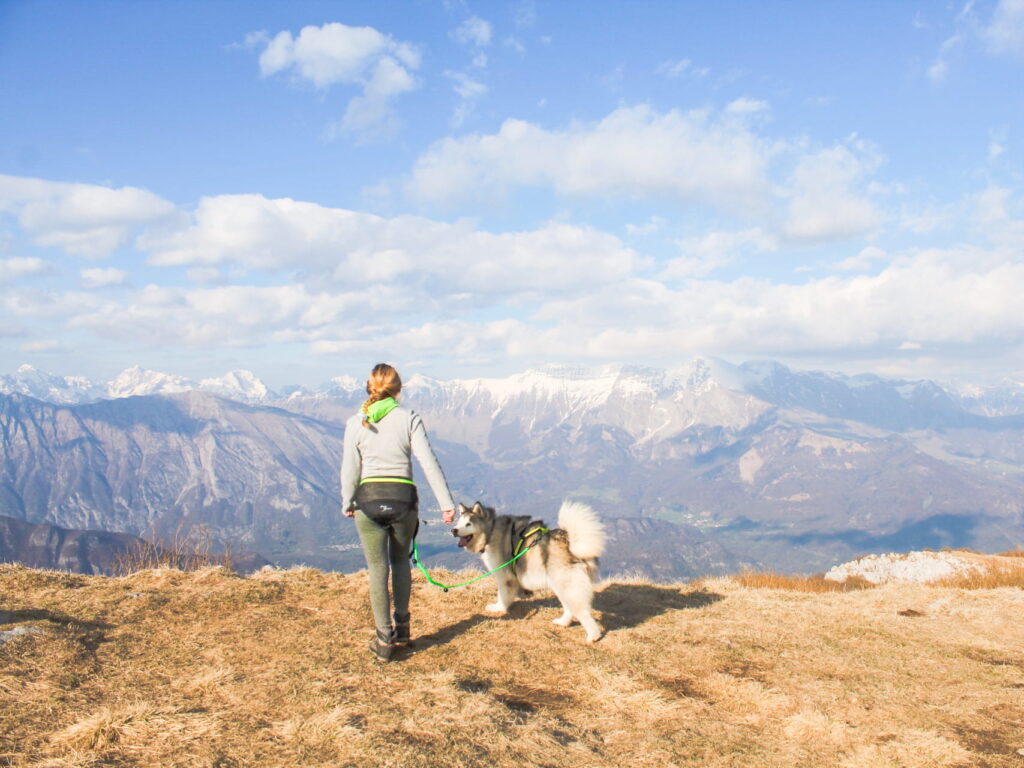
Racing Belt
Choose this belt for trekking with a strong puller when you don’t need storage space or when you’re already carrying a backpack.
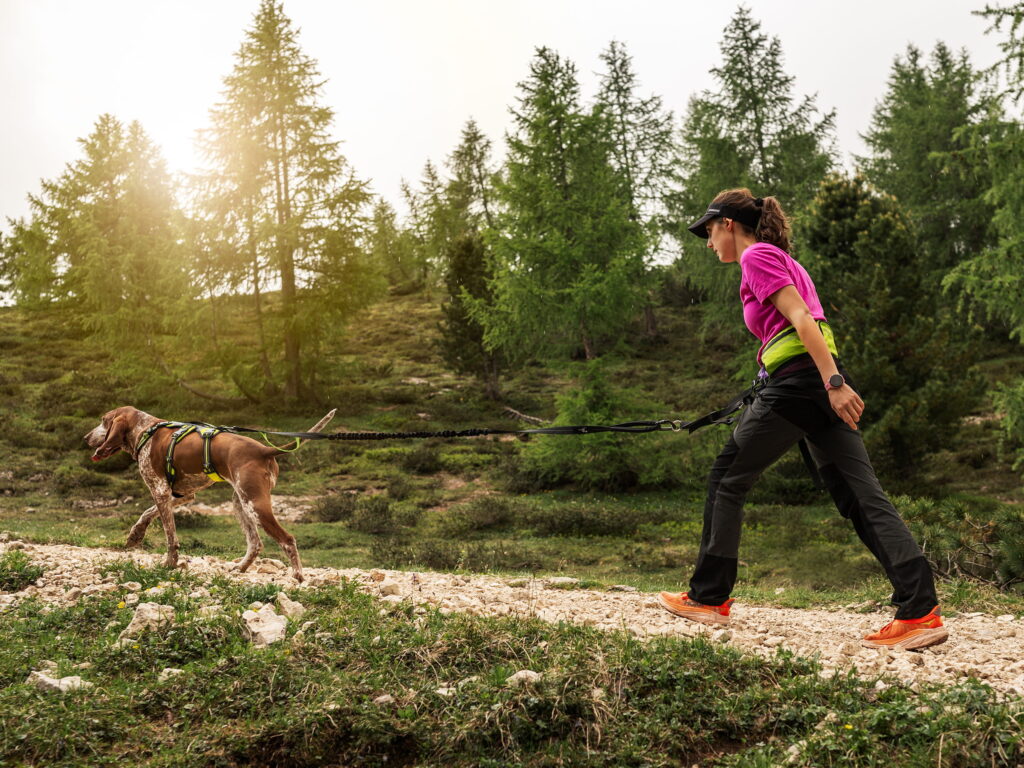
Explorer Belt
Choose this belt for trekking with a strong puller or for long treks where extra storage is useful.
Learn more about belts in our article “Belts – Guide”.
→ Water and water bowl
Always carry enough water for both you and your dog and take regular breaks to offer water, especially in warm weather. Dogs can overheat quickly during physical exertion such as pulling.
→ Booties and Winterpad Ointment
Depending on terrain and weather conditions, dog trekking can be tough on paw pads (rocks, snow, ice, hot ground).
Good prevention includes:
- Using a paw ointment to strengthen and protect pads
- Carrying booties in your backpack in case of injury or extreme terrain
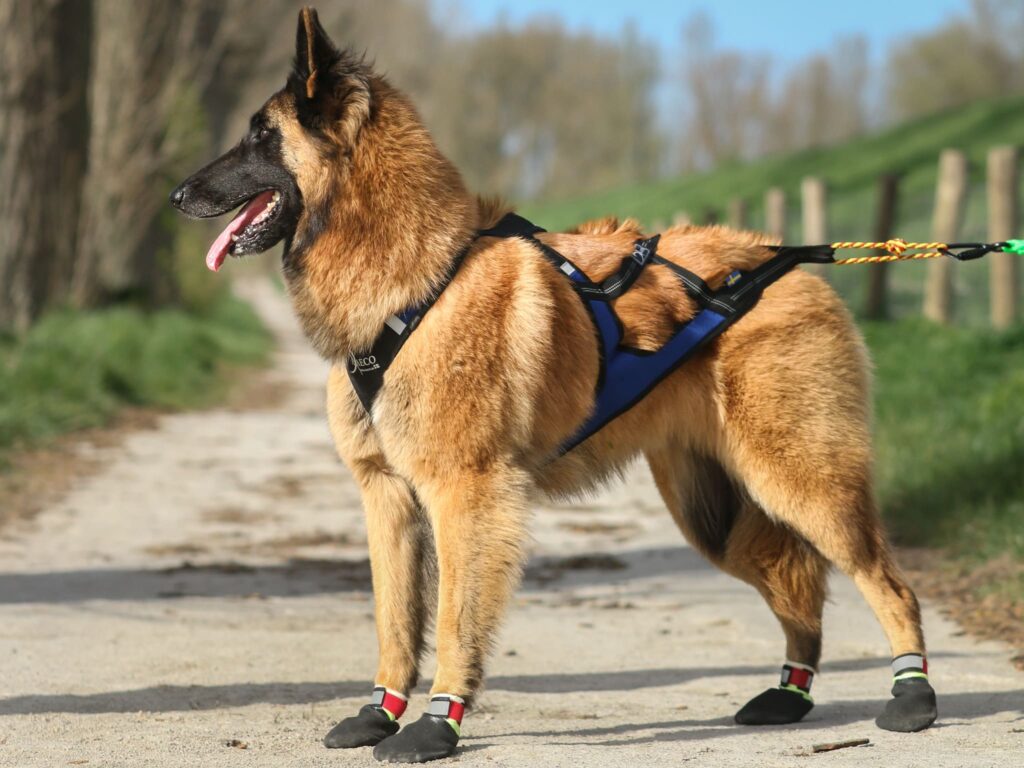
→ First aid kit
You never know what might happen on a trail. A basic first aid kit is essential at all times.
It should include disinfectant, bandages, gauze and basic wound-care supplies.
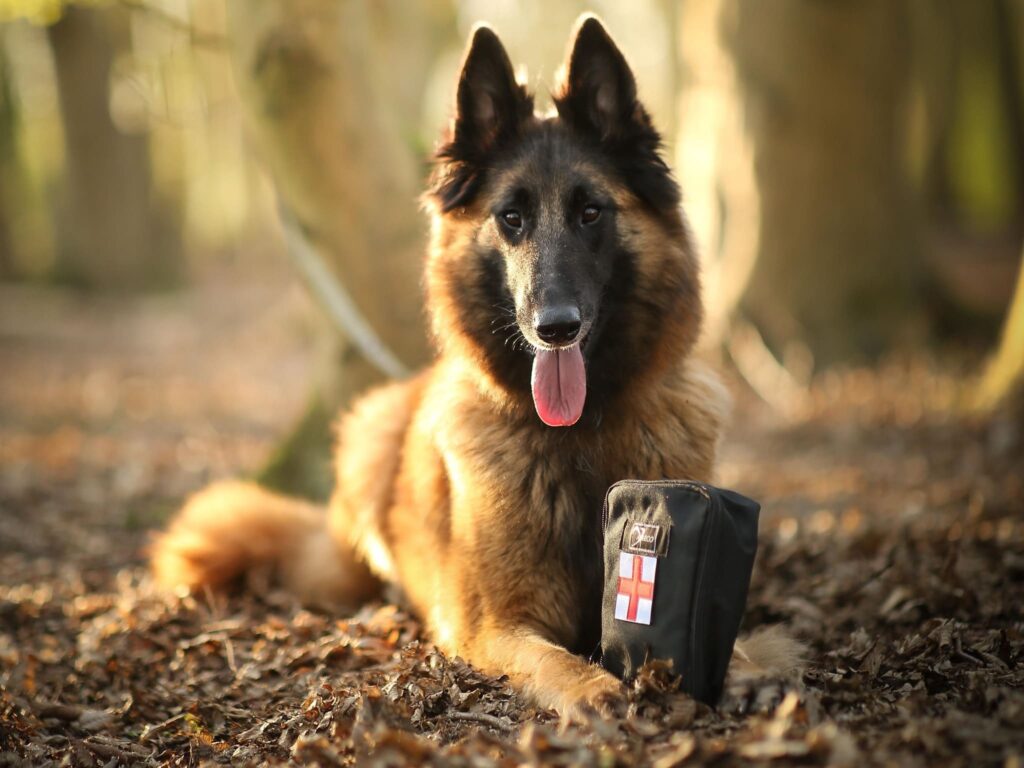
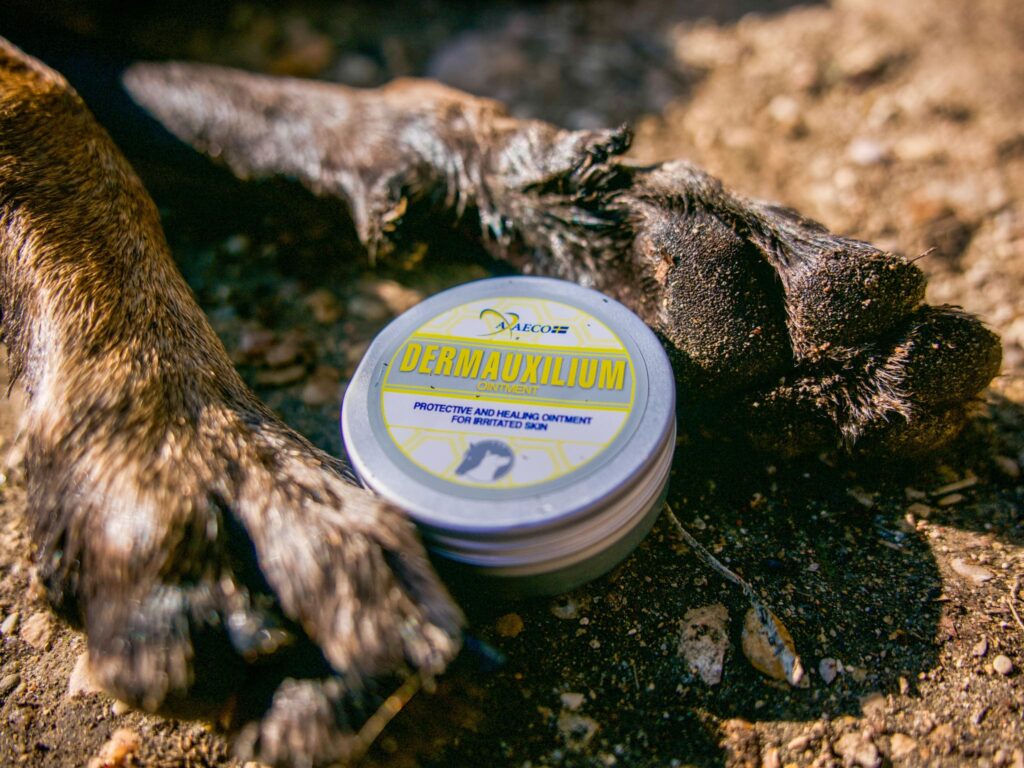
→ Dermauxilium
A protective healing cream helps wounds recover faster and protects them from bacteria while on the trail. Always clean and disinfect the wound before applying the cream.
→ Treats
Optional but super helpful to keep training going and distract your dog if needed.
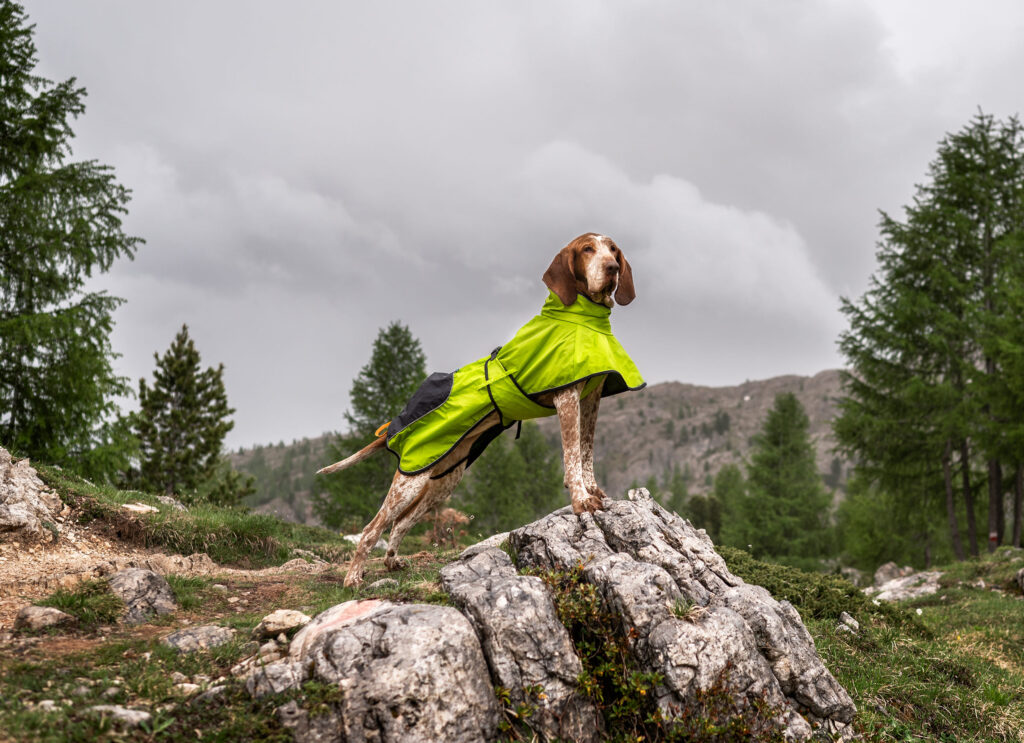
→ Coat
Bad weather doesn’t mean dog trekking has to be cancelled. A coat can help keep your dog comfortable in rain, wind or snow.
Find out more about dog coats in our article “Dog Coat – Guide”.
4.
Physical training for your dog
Before starting dog trekking, your dog should be properly prepared physically. Like any endurance sport, preparation makes the experience safer and more enjoyable.
Build strength first.
Start with regular nature walks to build a solid foundation. Uneven terrain helps develop balance, coordination and muscle strength. You can also include swimming and short running sessions.
Increase distance gradually.
The golden rule of dog trekking is progressive distance increase. You might begin with a 3 km hike and, over time, with consistency and proper recovery, build up to 30-40 km for certain dogs. Sudden increases in distance or elevation can lead to muscle soreness, joint strain or even injury.
Know the dog in front of you.
Every dog is different. You should adjust your expectations and avoid pushing too hard if your dog:
- Has health concerns
- Is very young or senior
- Belongs to a sensitive or heavy breed
- Is prone to anxiety or overstimulation
Watch for signs of fatigue.
Always take signs of tiredness seriously. These may include:
- A “checked-out” or dull facial expression
- The line no longer staying tense because your dog has stopped pulling
- Slower reactions
- Reduced enthusiasm
5.
Alternate excursions: using pulling gear or a long line/free
A dog will rarely feel fulfilled if every walk involves pulling.
While dog trekking is a great activity, it shouldn’t be the only type of outing your dog experiences. Pulling also puts repeated strain on specific muscle groups, mainly in the chest, shoulders and front of the body. If practised exclusively, it can lead to muscular imbalance. Doing different types of walking activities helps develop a more balanced and healthy musculature.
To keep your dog physically and mentally balanced, it’s a good idea to alternate between:
- Dog Trekking sessions
- Relaxed walks on a long line
- Free exploration if possible
These different outings allow your dog to sniff, explore and move at their own pace, which is essential for their mental well-being.
6.
Hydration & Nutrition
Since dog trekking is a more endurance-focused activity, it’s not dangerous to feed and hydrate your dog a few times during your outing. It’s also better to let them drink small quantities regularly rather than a large amount once or twice, which can increase the risk of bloating. If your dog is especially prone to bloating, take longer breaks and keep activity slow just after drink breaks.
During your hike, it’s important to stop regularly to offer your dog water, roughly every 30 minutes or so, though this will depend on how physically demanding the trail is and the weather conditions. Never wait for your dog to show signs of needing water such as panting excessively, drooling or collapsing.
It’s important to bring your own water or make sure safe water is accessible along the trail. Letting your dog drink from puddles or waterways can be dangerous: bacteria (for example cyanobacteria or leptospira, both potentially deadly) and parasites can be present. The more you offer clean water to your dog, the less likely they are to try drinking from other sources. You can also teach them not to drink from puddles through training.
If you and your dog have reached a high level of trekking and go on long and demanding treks, you may also consider adding dog-specific electrolytes. The safest option is to discuss this with a veterinarian first.
Learn more about dog hydration in our article “Hydration: an often neglected element in the diet of canine athletes”.
As for food, on normal day hikes, there’s no real need to alter their normal diet but, as mentioned earlier, you can give treats as a reward without risking your dog’s health. For longer treks or high-effort days, small snacks can help maintain energy levels. It is also best to discuss this with a veterinarian beforehand.
Full meals should be given well before starting and after finishing the activity to avoid digestive discomfort.
7.
Which commands should you teach your dog?
The beauty of dog trekking is that obedience isn’t required, what really matters is your dog’s natural instinct and motivation to pull. That said, teaching a few key commands makes your adventures safer, smoother and more enjoyable for you both:
Heel
If your dog can stop pulling and walk calmly by your side for a short time, it’s extremely useful. You may need this on narrow paths, when crossing roads, to let other hikers pass or in crowded areas.
Behind
During descents, your dog may still want to pull and given that they walk on four legs, they’re generally more stable than you. Asking your dog to stay slightly behind can help you keep your balance.
Stop
Essential in case of emergency or just to take a break.
Go
A clear signal that your dog can start pulling again. This creates structure and avoids confusion, especially after pauses or technical sections.
Leave it
Unfortunately, some trails are full of litter or unexpected hazards. Teaching your dog not to grab things from the ground can be really useful.
BONUS: Stay
Not essential for trekking but perfect for capturing awesome pictures.
Dog trekking may be driven by instinct, but a few well-taught commands can transform it into a true partnership experience.
8.
Safety
Dog trekking is rarely a dangerous activity, but being out in nature for adventures still requires some preparation for potential risks.
First of all, you should be prepared for the possibility of injury.
- Learn basic first aid, more in-depth training is also available, usually in the form of a weekend course with a specialized organization.
- Bring a pet first aid kit so you can act quickly if needed.
- For medium-sized dogs, you can also carry a lightweight emergency dog carrier that folds into a small pocket.
To limit the risk of diseases or parasites that your dog may be exposed to in nature, make sure your dog’s vaccinations are up to date and use some kind of repellent for parasites such as ticks, mosquitoes and fleas. Don’t forget to check your dog for ticks when you get home.
Check local leash laws so you know how other users may behave and how you should behave as well. Being prepared for potential off-leash dogs running up to you while your dog is pulling can make a big difference.
A seasonal danger to be aware of is the pine processionary caterpillar. These caterpillars fall from pine trees and can seriously injure dogs if they come into contact with their face or paws. You can carry food-grade baking soda to rinse the affected areas if this happens.
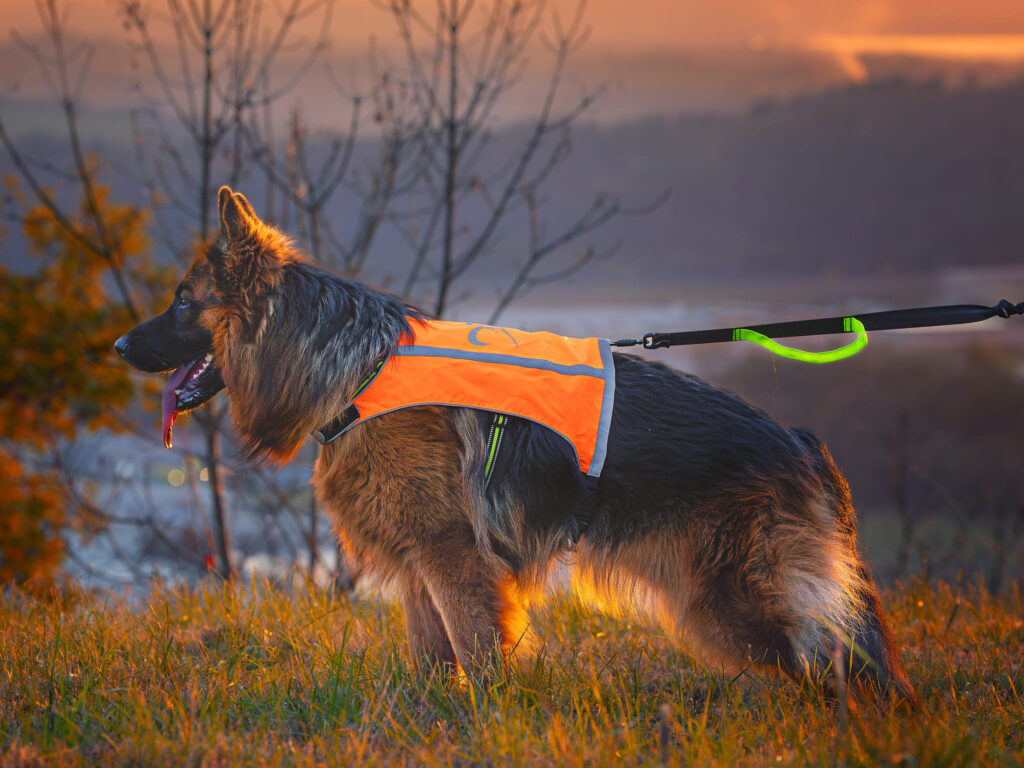
Finally, try to always remain visible to other users, including hunters, for example by using high-visibility gear such as our Trapper Vest.
9.
Adapt to the season
Dog trekking in winter and summer can almost feel like two completely different activities! Here’s why.
→ Summer Dog Trekking
In summer, the biggest concern is the heat. Dogs are much more sensitive to heat than humans, which means overheating can happen quickly during physical activity.
One of the best strategies for summer dog trekking is simply to avoid the heat whenever possible. Choose forest trails where you can stay in the shade rather than open fields where you and your dog would be exposed to direct sunlight. Targeting higher-altitude trails can also make a big difference, as temperatures often drop significantly with elevation.
It’s also a great idea to plan hikes near lakes, rivers or streams where your dog can cool off. Bringing cooling gear can also help keep your dog comfortable and safe.
For more advice, check out our article “Hot Weather Pulling Sports with your Dog: Safety, Useful Strategies and Things to Avoid”.
→ Winter Dog Trekking
Winter is an ideal season for dog trekking, but you should stay aware of conditions, especially at higher altitudes where snow may be present.
Deep snow can dramatically increase the level of effort required for both you and your dog, so it’s usually best to choose shorter routes than you would in other seasons. If your dog is sensitive to the cold, consider bringing a protective coat to keep them comfortable.
Rain is another factor to keep in mind. Wet conditions can make the terrain slippery and reduce visibility, which can significantly increase the risk of accidents.
Being aware of weather conditions is therefore extremely important when planning a dog trekking trip.
10.
Trail Etiquette
When exploring nature trails, it’s extremely important to respect other trail users, wildlife and the trail itself.
Respecting other hikers means keeping your dog under control at all times, either on a leash or with a strong recall and staying aware of your surroundings. Some people may be afraid of dogs or allergic to them and other dogs can react strongly to unfamiliar dogs. Giving others space helps everyone stay comfortable and calm.
“Leave no trace” is the most important rule in nature. Your trash, as well as your dog’s waste, should never be left behind.
You should also help protect wildlife from being impacted by your dog’s presence. This means never allowing your dog to chase wildlife. It also means picking up dog poop, since the scent of a predator can be stressful for prey animals and disrupt the natural balance of the environment.
Learn more about the impact of leaving dog poop in our article “No poo left behind: Is it safe to leave your dog’s poop in nature?”.
To help you stay consistent with Leave No Trace principles, equip yourself with a Poop Of. This sealed pouch easily attaches to your backpack or belt and securely stores waste until you reach a proper bin. It also features strong magnets, allowing you to attach it to the outside of your car for the ride home.
Conclusion
Dog Trekking is not about performance but more about slowing down and enjoying nature together. Whether your dog is pushing you to discover hiking or you were born in the mountains, sharing a hike with your dog is truly a bonding experience and a breath of fresh air. It is not an activity that involves competition, each team is free to choose trails for their own level and enjoyment, making it accessible to most dogs.
Like any outdoor activity, success comes down to preparation: the right gear, a progressive training plan, good hydration habits and information gathering. Most importantly, it comes down to knowing your dog: their limits, their health and their needs.
If you choose to go Dog Trekking in the mountains, make sure to stay safe and stay aware of potential dangers, especially in winter!
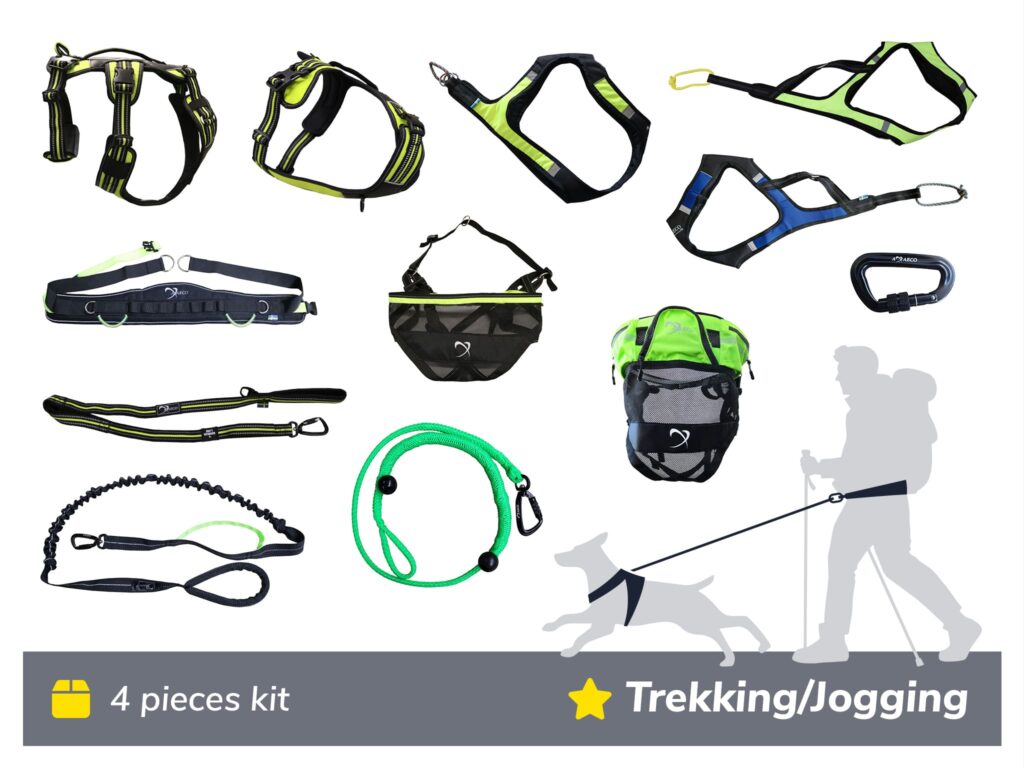
If you are looking for a quick way to start with Dog Trekking, have a look at our Dog Trekking Starter Kit!
FAQ
Dog Trekking consists of hiking with your dog while using pulling gear. The dog helps pull you forward and it offers all the benefits of pulling sports, such as muscle development and an outlet for their energy.
Almost all dogs can do some form of dog trekking with proper physical training! Consult your vet or dog osteopath before getting started.
With well-trained dogs and the right gear, you can connect up to 4 or even 6 dogs together, but it’s easier with 3 or fewer!
Checklist:
– Belt
– Carabiner
– Elastic Line
– Pulling Harness
– Water
– Poop bags
Optional:
– Booties
– First Aid Kit
– Snacks/Dog chews
– GPS
– Ointment against snow balls
– Ointment for injuries
– Training treats
– Dog Coat
– Poop Of
– Dog tag with your number
– Dog toy
– Trapper Vest
For you:
– Hiking shoes
– Hiking clothes
– Sunglasses
– Sun screen
– Payment method (food, vet emergency…)
– Raincoat
– Phone
– Snacks
– Treat pouch
You can keep a change of clothes in the car, it often comes in handy! You may also want to carry a more complete first aid kit, for example including a muzzle, as injured dogs can sometimes show aggressive behaviour.
There are no set limits in terms of kilometers or elevation gain. You should pay close attention to your dog and learn about their abilities by gradually increasing distances. Dogs who have had extensive training in Dog Trekking or Dog Trail can cover more than 50 km a day. Remember you can also split a long trek into a multi-day expedition, covering 15-20 km per day over several weeks!
There is no age limit for trekking with a dog and keeping older dogs active is very important to keep them healthy for longer. Dog Trekking is relatively low-impact on the joints but can still be demanding and cause muscle soreness. Consult your vet regularly to make sure your dog is still fit enough for this kind of activity!
Dog Trail is a different activity that uses the same gear for the dog but involves a lighter pack containing mostly water and snacks and dogs require significantly more training before tackling long distances. Learn more in our article “Dog Trail vs. Canicross: What’s the Difference?”.