In canicross, bikejoring and scootering, people tend to think of the dog as the engine that drives everything. In reality, the handler is the second motor: which means that if the ‘human motor’ stalls or breaks down, everything comes to a halt and the risk of injury increases. In dog pulling sports the weakest link is almost always the human and that’s why it’s essential that you work on your own physical fitness in the gym to prevent injuries which can be caused by being towed by your dog and to improve your team’s performance. In this guide we’ll look at some of the exercises you should be doing and why.
The human athlete is the team’s second engine
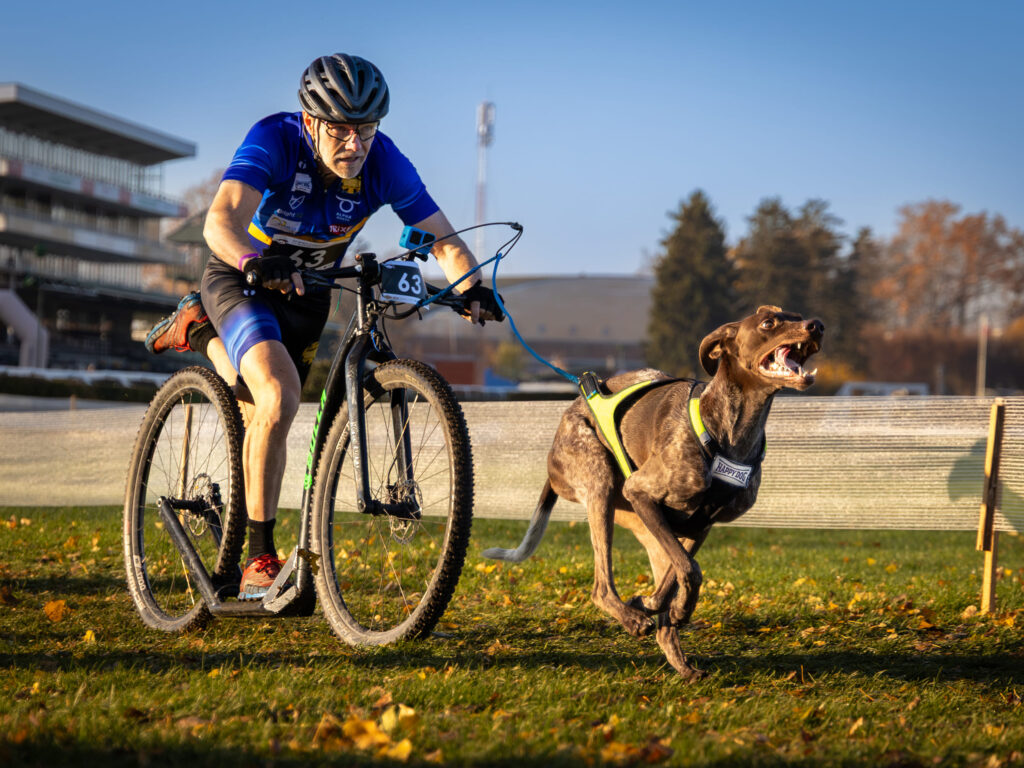
In dog sports the best teams are those where the canine athlete and human athlete work in perfect synergy and, when necessary, are ready and able to suffer for each other. Pulling dogs run at 25-30 km/h, and can even reach 40km/h when towing a bike or scooter, so the force exerted on your belt or harness can be pretty brutal, especially if you are a runner.
Often, as in other sports, humans tend to focus more on cardio exercises rather than targeted muscle training: a big mistake. Working out at the gym should primarily be about avoiding injury from being towed.
What happens to your body when your dog pulls?
Canicross: increased strain on knees, ankles and spine
In canicross, the dog’s pull “forces” you to take longer and faster strides than usual, which triples the impact on your knees, ankles and spine. With the right exercises at the gym your muscles can be trained to act as shock absorbers, mitigating some of the impact generated during cross country running with your dog.
Tow lines are hard on your back
In pulling sports the dog’s leash attaches to your waist or to your bike or scooter’s handlebars: this means that stabilizing your spine is essential, because if your dog suddenly jerks to one side or gives an unexpectedly hard tug, your back takes the brunt of twisting and hyperextension forces. To withstand these forces you need a strong core, a weak core doesn’t provide sufficient stabilization and increases your risk of herniating a disc or sciatica.
Bikejoring and scootering: weak legs make you a dead weight
In bikejoring and scootering, you have to help the dog by pedalling or pushing hard during critical sections or uphill, to boost speed. If you don’t have leg strength, as well as good cardiovascular endurance, you are just a dead weight.
The most important exercises you need to do for pulling sports
Classic bodybuilding workouts are not particularly helpful for these sports. You need functional exercises which focus on three key aspects: asymmetric strength, deep core stability and eccentric strength.
→ CORE: anti-rotation exercises, not classic crunches
Forget crunches. You need exercises which work on stability and anti-rotation strength so that your core is better able to resist external forces i.e. your dog suddenly pulling.
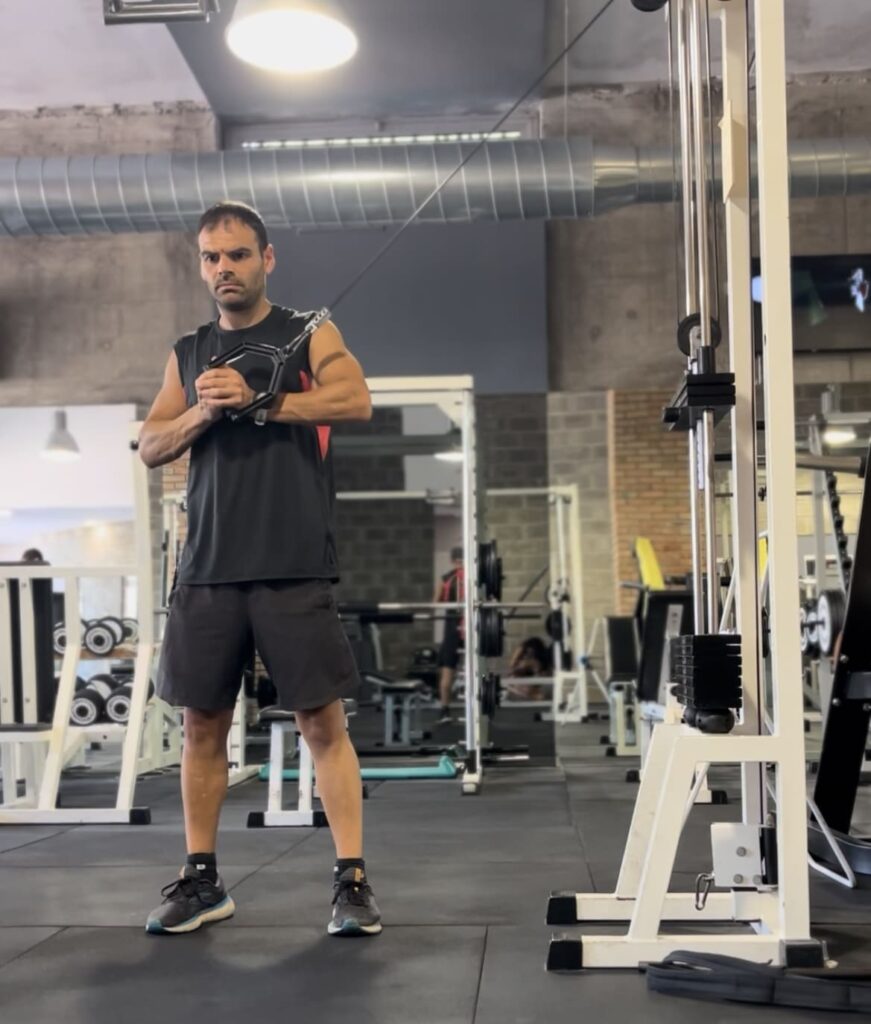
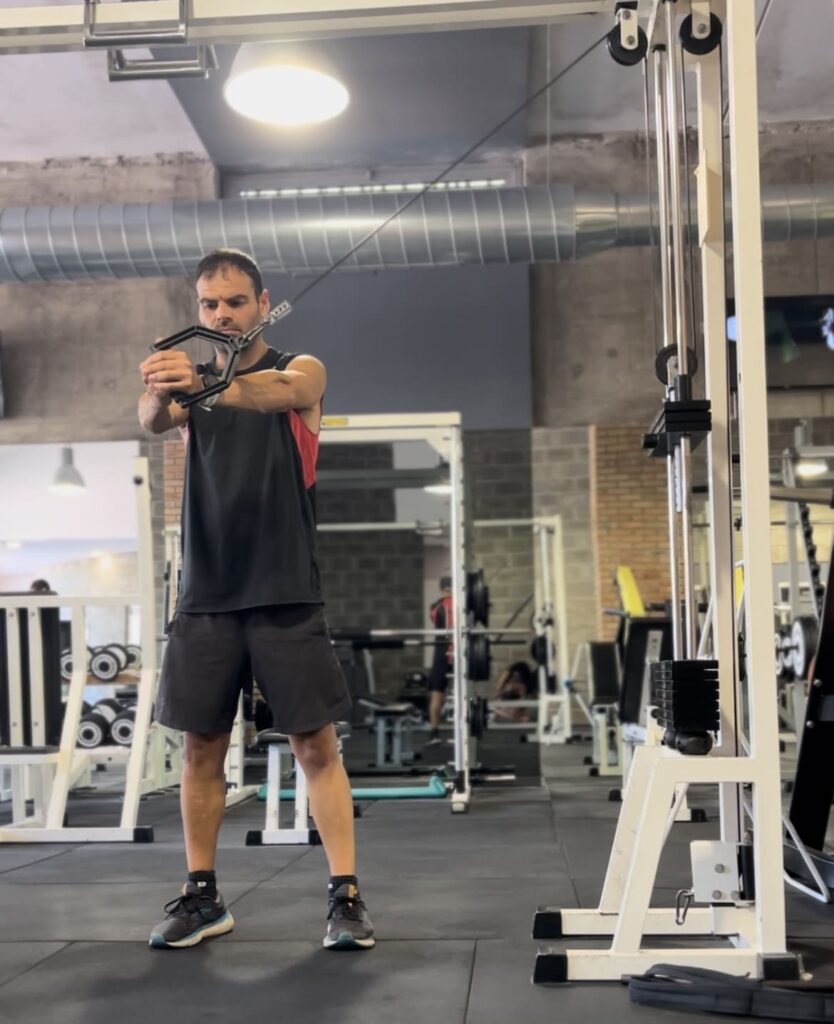
- Pall of Press: Using a resistance band or cable anchored to the side, grip the handle to your chest and then extend your arms forward. Your core has to work hard to stop your torso from rotating towards the anchor point.
- Dynamic Planks: different variations help build torso stability and resistance.
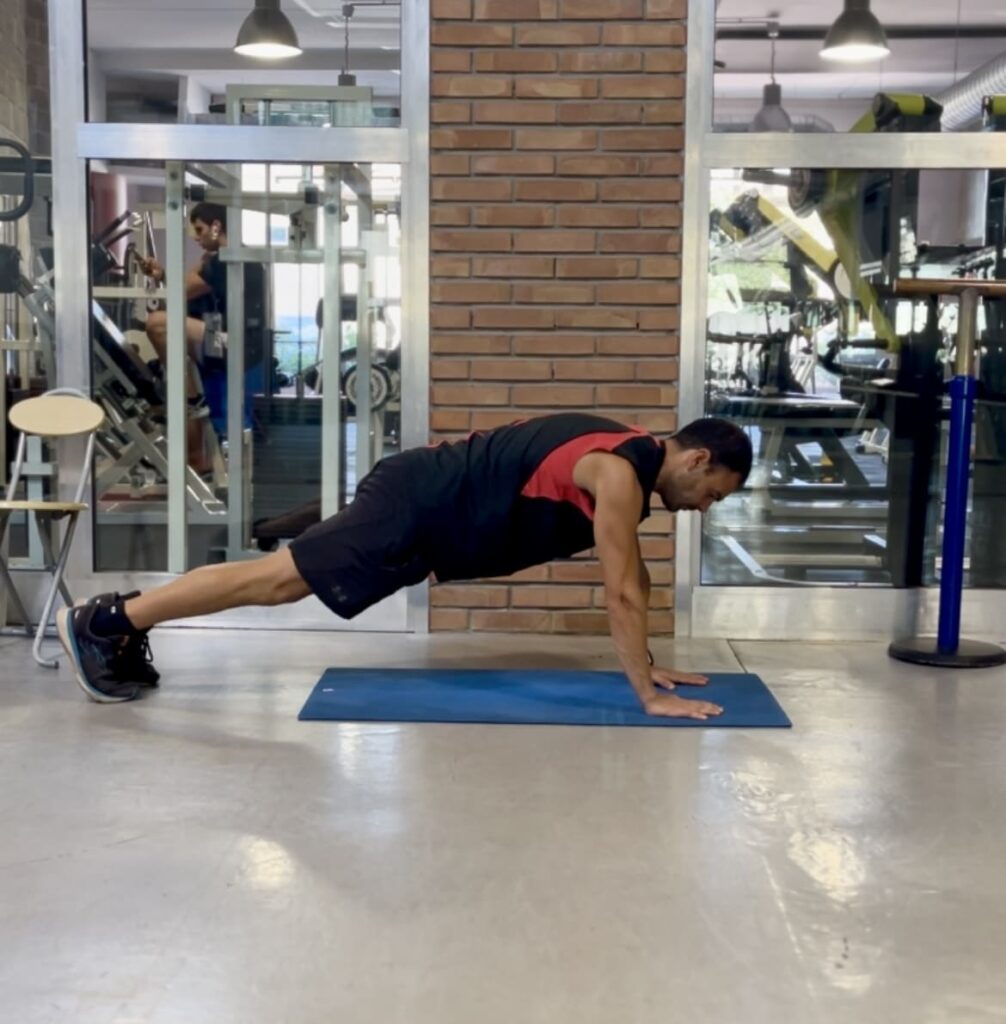
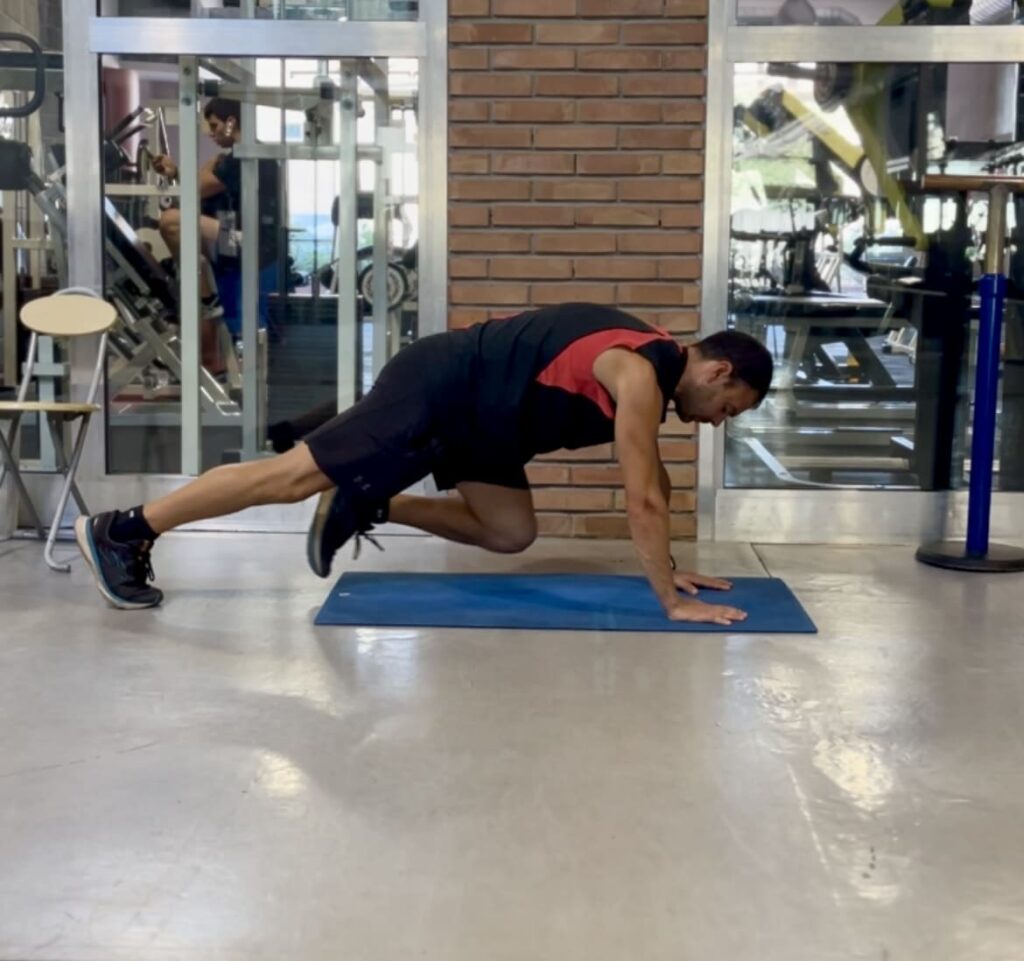
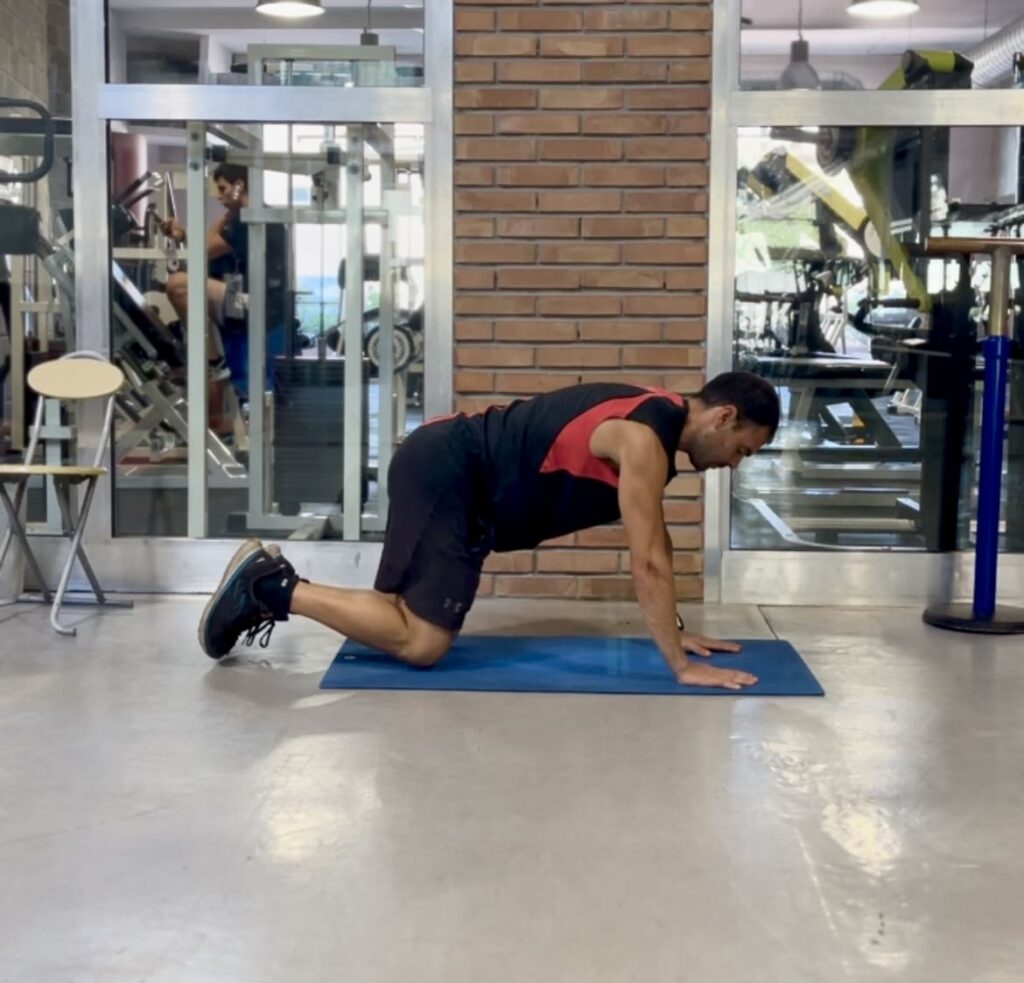
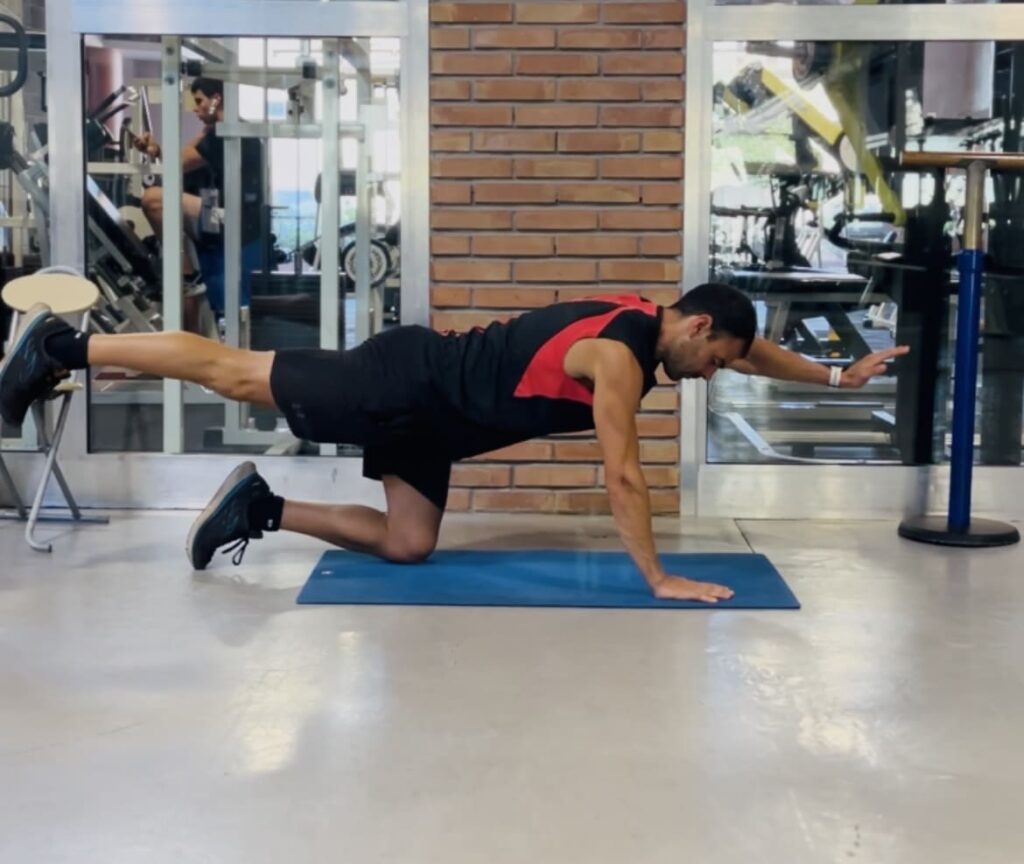
- Full Bird-dog: excellent for strengthening the deep stabilizing muscles of your spine and core.
→ LEGS: unilateral exercises are key
In canicross, you obviously run by pushing off one leg at a time, and in scootering you push asymmetrically: that’s why single-leg exercises are essential.
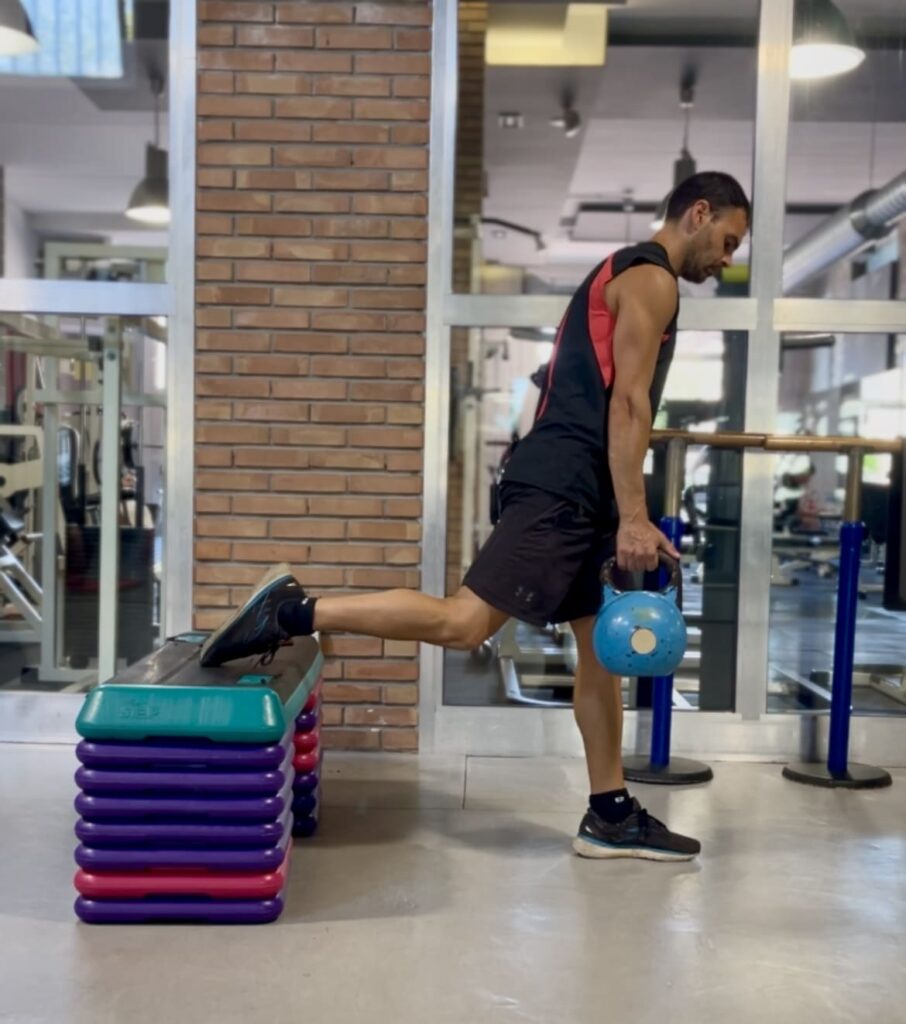
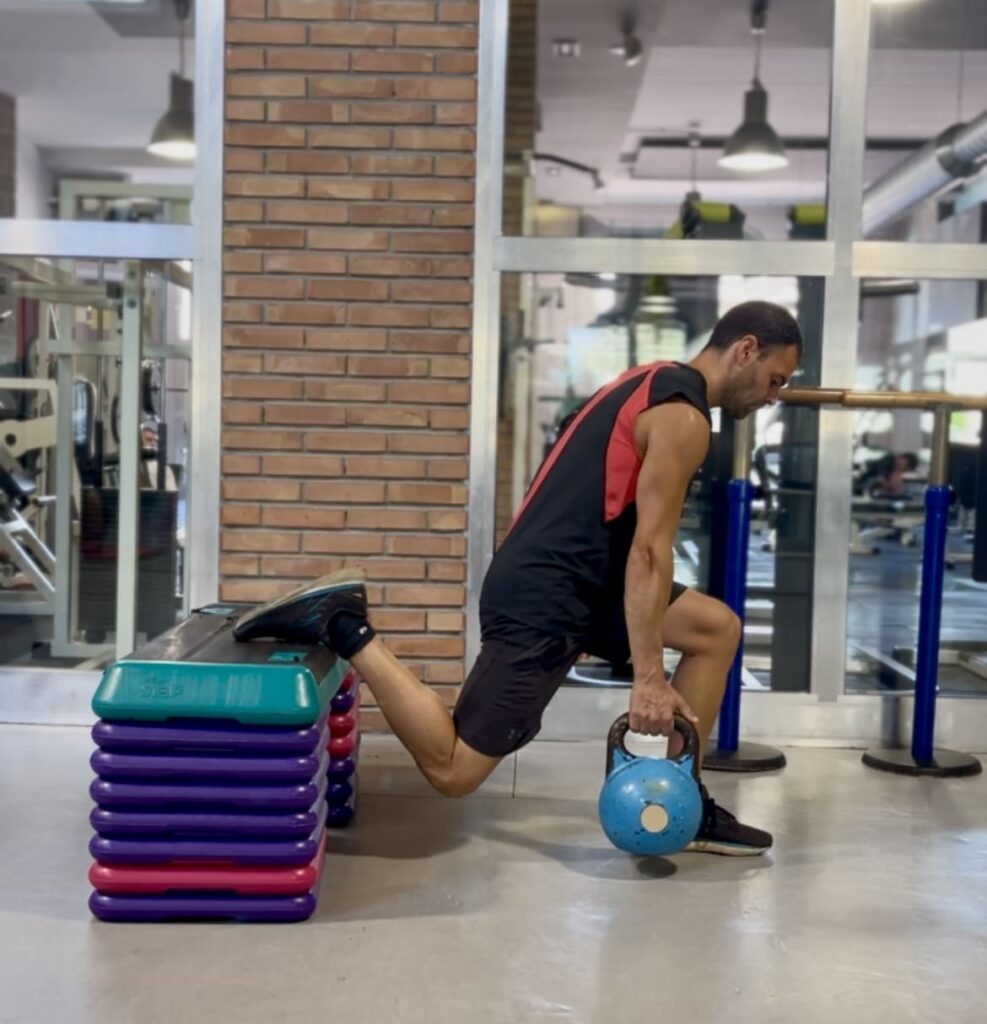
- Reverse or Bulgarian Lunges: Stepping back into a lunge or putting your back foot on a bench, means that you are doing a single-leg squat. This exercise works your quadriceps and glutes and improves knee stability, it also simulates the load you experience when your foot strikes the ground as you run.
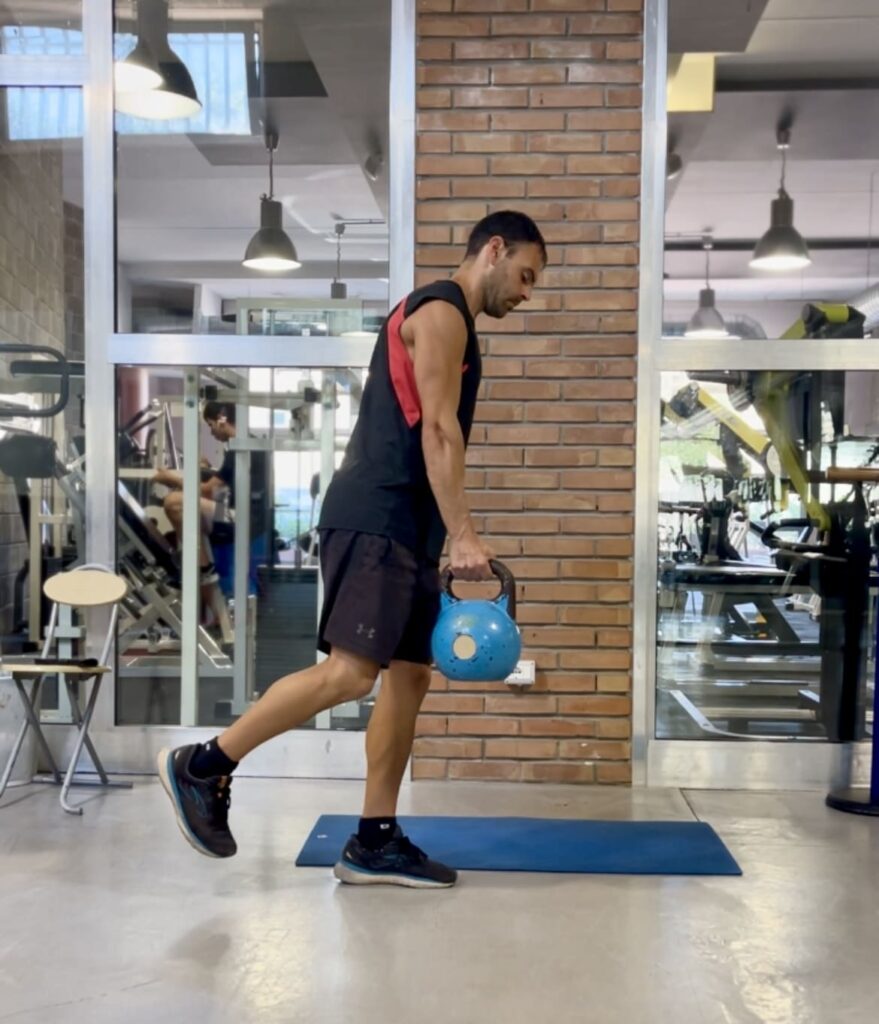
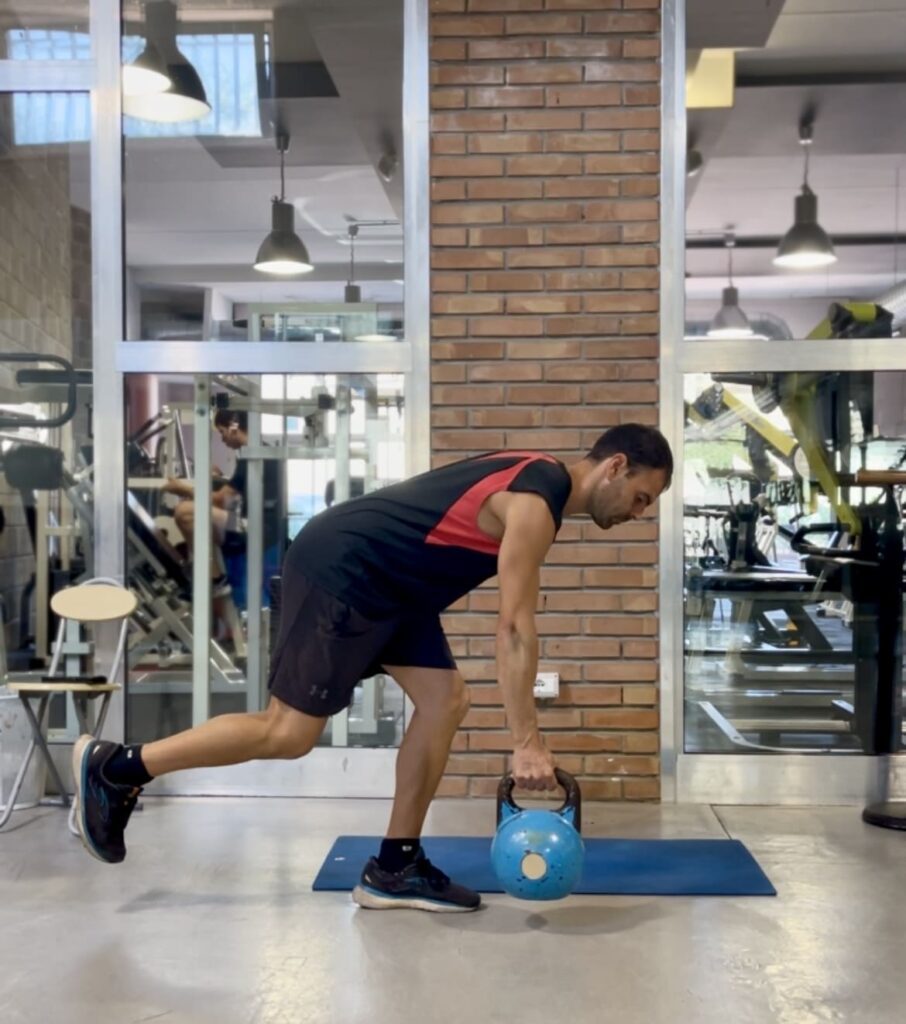
- Single-Leg Romanian Deadlift: essential for strengthening your posterior kinetic chain (hamstrings and glutes) and improving ankle stability, which is crucial on the uneven and rough terrain where these sports are practised.
→ EXPLOSIVE STRENGTH: controlled plyometrics
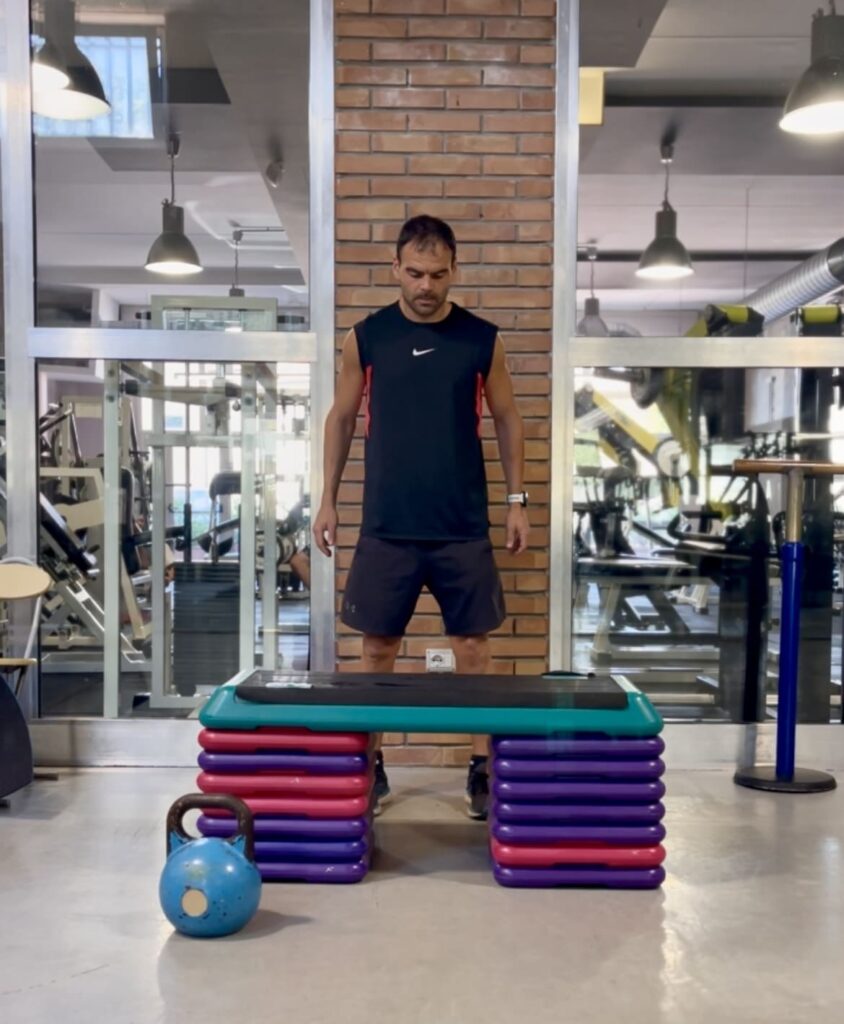
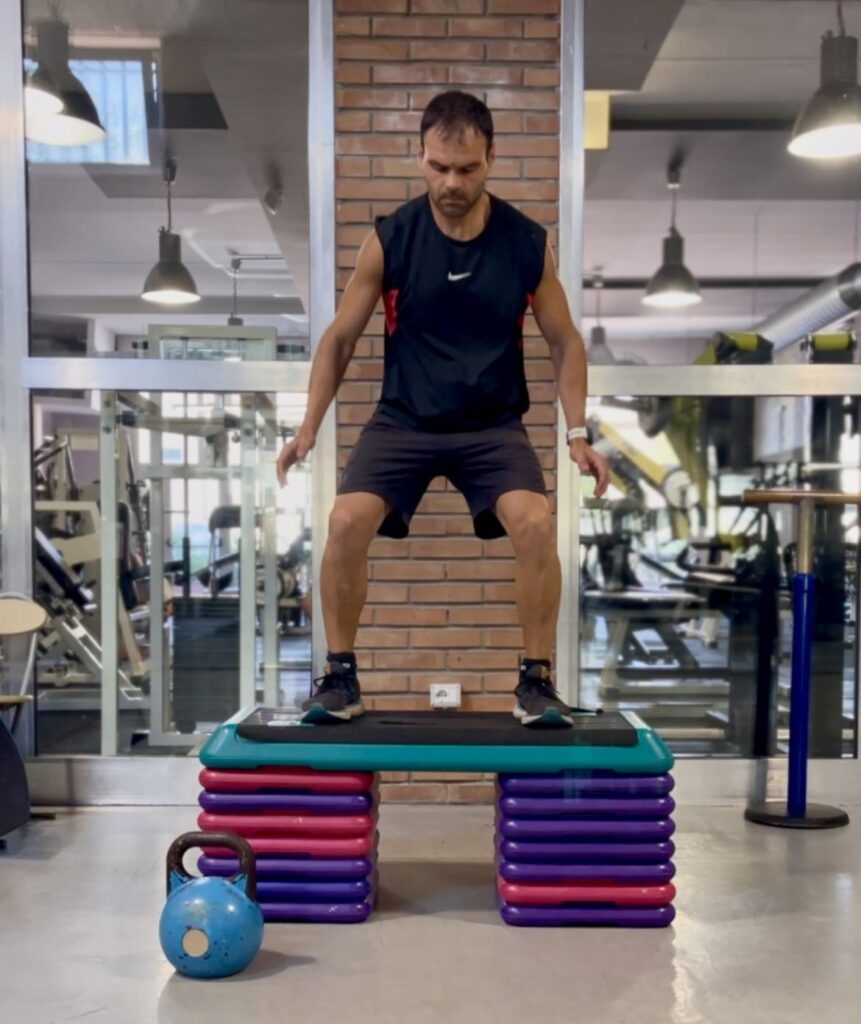
- Box Jump and Drop Jump: jumping on and off a raised platform and smoothly absorbing the impact when your feet hit the ground, teaches your tendons how to handle the eccentric movement in running.
→ UPPER BODY AND GRIP: vehicle control
To be able to steer a bike or scooter which is being pulled by a dog at 30 or 40 km an hour on a dirt road and maintain good posture, you need excellent upper body strength. To train your arms, shoulders and grip, which are essential to keeping control in bikejoring and scootering, I recommend:
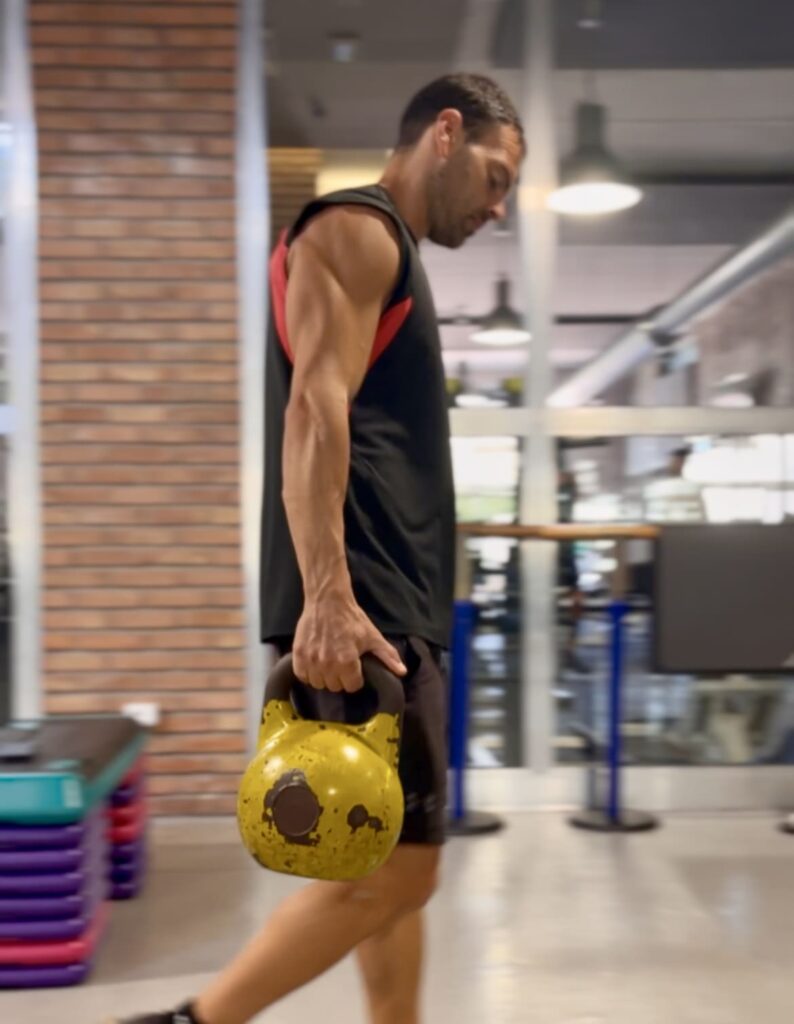
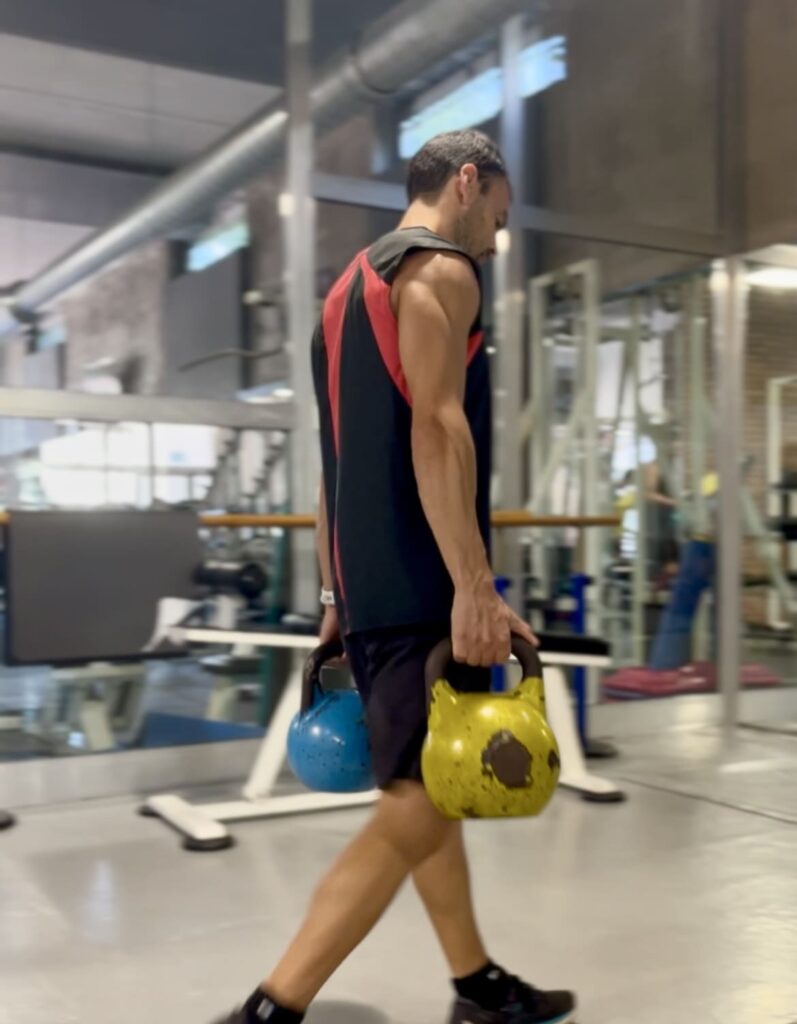
- Farmer’s Walk (or Carry): walk while holding a heavy dumbbell in each hand and with your arms hanging along your sides. This exercise builds tremendous grip strength and stabilizes your shoulder muscles (rotator cuff), trapezius and abs.
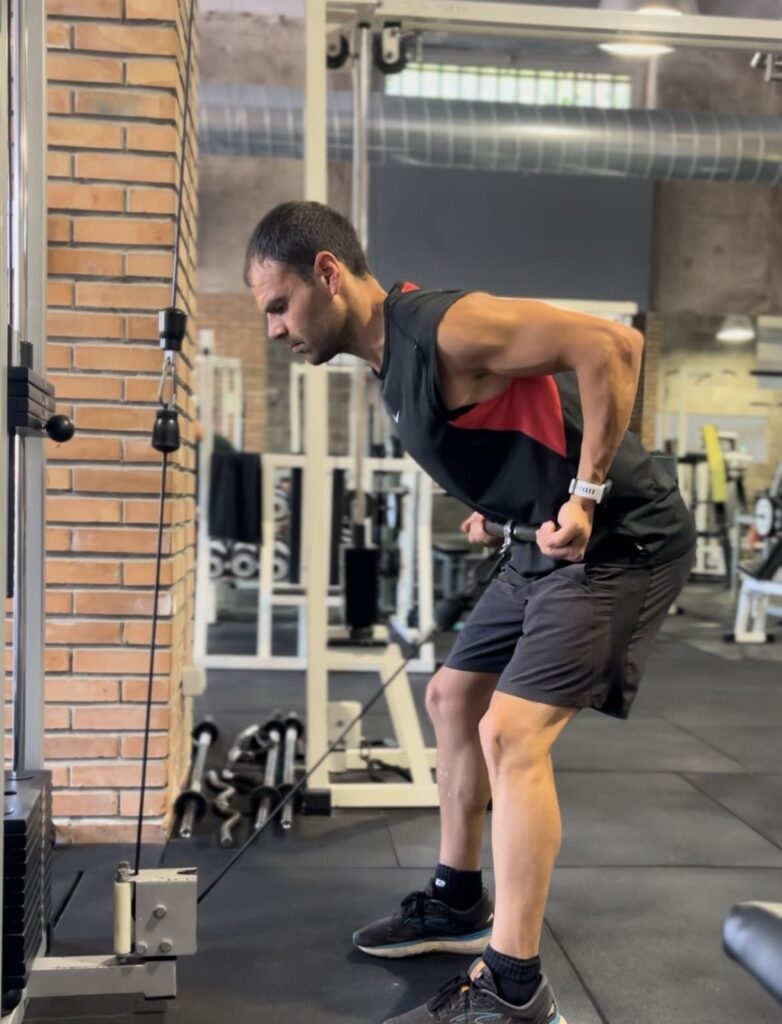
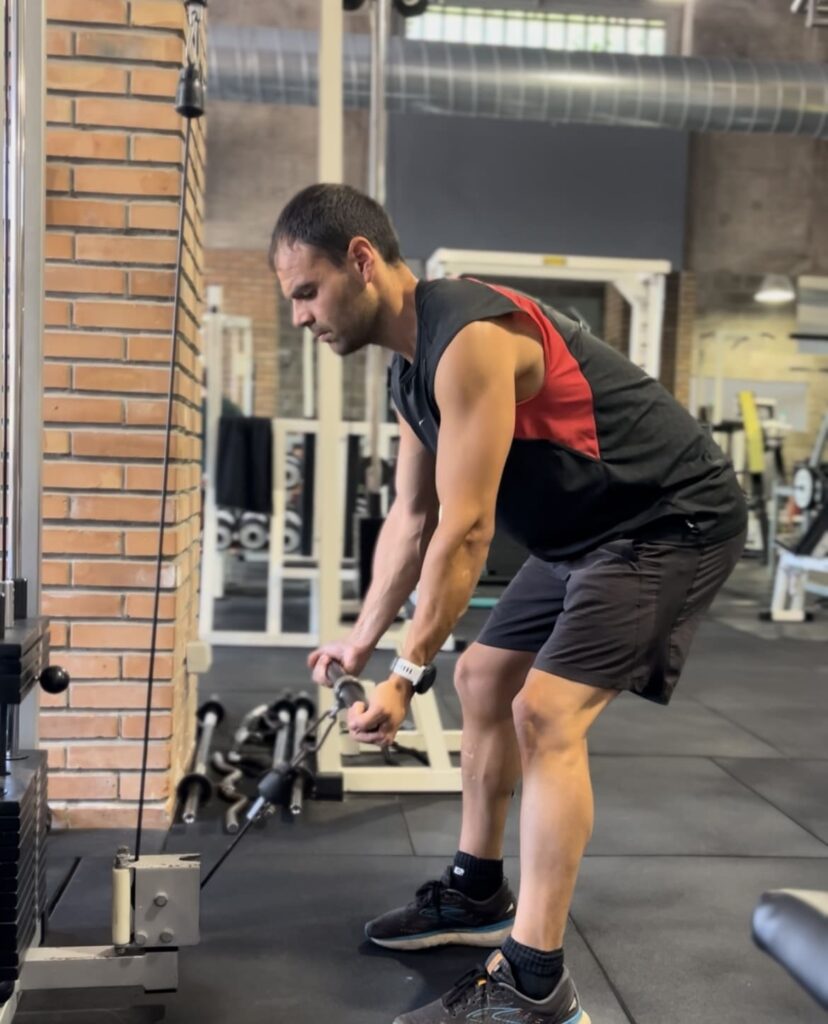
- Rowing (with a barbell, cable machine, or dumbbells): strengthens your back muscles (latissimus dorsi), which makes you better able to resist the dog’s violent tugs on the handlebars and not have your arms “jerk” forward, and effectively counteract the pulling force at your waist.
Flexibility, Proprioception and Stretching: Never Skip Them
Always include exercises for flexibility, proprioception and balance as part of your warm-up, and dedicate your cool-down to stretching.
One final tip: personalize your training program
These are just some of the exercises that can help improve your performance. My advice, though, is always to incorporate them into your training program with the help of a sports science professional, who can add other exercises based on your specific weaknesses, your posture and your “sport-specific” biomechanics. A personalized training program is essential.
And remember: you are working to get better at the sport you do with your dog, as part of a team. It may seem like a trivial concept, but that’s the key to it all.
Written by
Mattia Minori
Dog Trail and Canicross champion.
Kinesiologist and posturologist, with a bachelor’s degree in Exercise Science, a Master’s degree in Sports Science and Methodologies, and a Master’s degree in Sports Posturology.
FAQ
Because the dog’s pulling increases stress on your knees, ankles and spine and subjects your back to sudden twisting forces. Working out at the gym trains your muscles to act as shock absorbers and stabilizers, reducing the risk of injuries such as herniated discs and sciatica.
Core stability exercises (Pallof press, dynamic planks, bird-dog), unilateral leg exercises (Bulgarian split squats, single-leg deadlifts), controlled plyometrics (box jumps and drop jumps) and grip and back strengthening exercises (farmer’s walk, rowing).
At least once a week is recommended, and you may want to increase your gym time to up to three sessions per week, provided the program is well-structured and balanced with cardio workouts.
No. Focusing solely on cardiovascular fitness and neglecting strength training is the most common mistake: without strength and stability, the dog’s pulling puts all the strain on your joints, making you the weakest link in the team.