
Which water activities can you do with your dog?
Spending time with your dog in and on the water is amazing fun and keeps you both active! The best water activities you can enjoy together are:
Swimming
Swimming is the most common water activity for dogs, and for good reason. It’s a full-body workout that builds muscle without putting stress on the joints, making it especially beneficial for older dogs or those recovering from injury. It enhances proprioception, strength, and endurance. It provides a genuine physical workout, making it an excellent way to help manage your dog’s weight and support cardiovascular health. It also offers meaningful mental stimulation, as the dog must think carefully about where to go, how to move, and when to exit…
Swimming is also quite easy to do as dogs can swim in the sea, lakes, rivers, and even pools. Most dogs take to it naturally, though some breeds or individuals need more encouragement than others. Always start in calm, shallow water where your dog can touch the bottom and build their confidence gradually. Be mindful of strong currents, tides, and hidden underwater hazards. You should also watch out for blue-green algae, which is toxic and can appear in warm, still freshwater. After every swim, rinse your dog thoroughly to remove salt, chlorine, or bacteria, and always make sure fresh drinking water is available so they’re not tempted to drink from the sea or lake.
Stand-Up Paddleboarding (SUP)
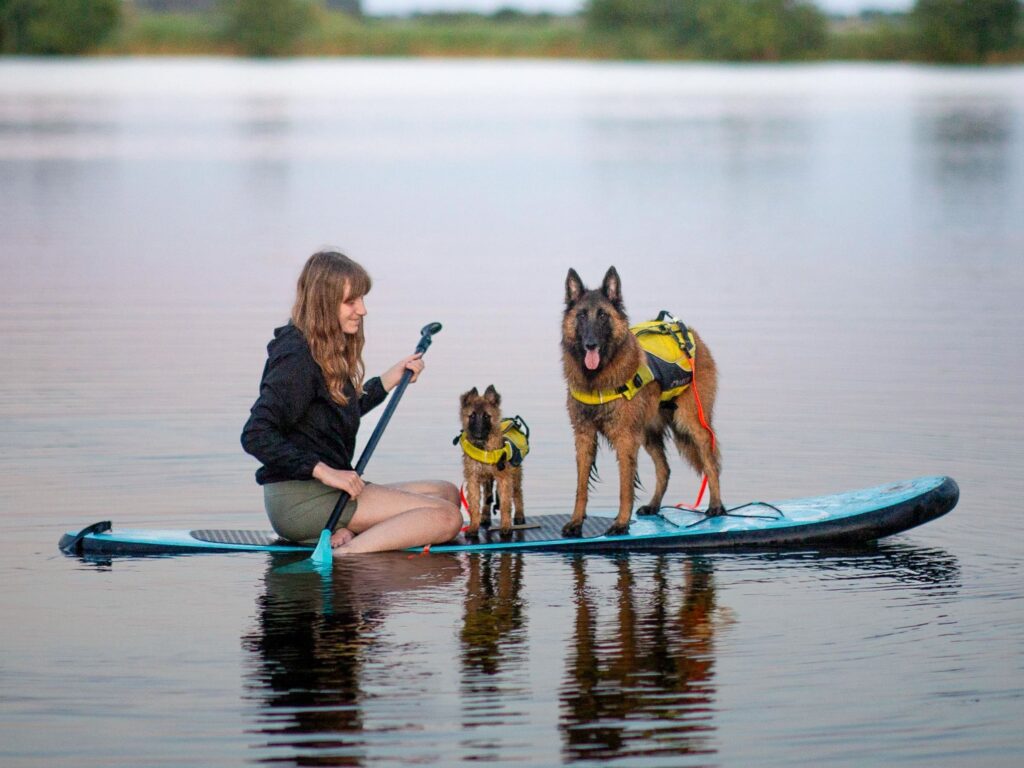
SUP is great balancing exercise for both you and your dog. It strengthens core muscles and builds confidence on the water. It’s ideal for dogs who are calm and comfortable staying steady on the board. Before hitting the water, let your dog first get familiar with the board on dry land. A non-slip pad on the board can really help keep your dog secure and comfortable. Start on calm, flat water and keep your initial sessions short. Position your dog towards the front or middle of the board for better balance. With patience and practice, many dogs absolutely love SUP.
Kayaking
Kayaks are generally more stable than SUP boards, making them a great option for less confident dogs or for longer outings. Your dog can sit or lie down comfortably while you paddle, making it a relaxing shared adventure. Sit-on-top kayaks tend to work best for dogs, as they offer more space and make it easier for your dog to get on and off. Introduce your dog to the kayak on land first, rewarding them for sitting calmly inside it. You can bring a blanket or mat to give them a more comfortable, designated spot to settle on. Make sure to avoid fast-moving water until both you and your dog are fully comfortable and always bring enough fresh water for longer trips.
Boating
Your dog can join you on various types of boats, from small motorboats to sailboats, as long as they feel safe and comfortable. Show your dog where their spot is on the boat and encourage them to stay there while sailing to avoid accidents. Plan for regular breaks where your dog can stretch, go to the toilet, and drink fresh water. Be mindful of sun exposure on longer trips, as dogs can get sunburned, particularly on their nose and ears. If your dog shows signs of seasickness (drooling, lethargy, or restlessness) you might need to work on gradually increasing their tolerance to being onboard and or even discuss possible medication with your vet.
No matter which activity you choose, the key is to introduce being on the water gradually, and ensure that it is a positive experience, and that your dog feels safe at all times.
Why are water activities beneficial for dogs?
Water activities are not just fun, they support your dog’s emotional, mental, and physical well-being in powerful ways.
Confidence building
Just like us, dogs gain confidence by doing challenging things. Learning to swim, balancing on a moving board, or jumping off a platform teaches them that they are capable of facing new situations.
Strengthening your relationship
Sharing new experiences deepens your bond. When your dog tries something unfamiliar with you, they learn to rely on your guidance and presence. These moments of teamwork build trust and connection.
Allowing your dog to choose whether to take part is key: always give your dog the option of taking a step back. Confidence grows when they feel safe and never forced.
Moments outside of your usual routine let you explore and grow your bond!
Mental stimulation
Water activities require dogs to focus and problem-solve, responding to you and the situation. Your dog must take initiatives, make decisions and stay focused on their balance and your cues. This type of mental engagement can be just as enriching as physical exercise, sometimes even more so.
Stress relief
For sensitive dogs, water activities can be incredibly soothing.
- The repetitive rocking movement of the boat or paddle board can be very relaxing
- Physical exercise naturally reduces stress
- Natural, quiet environments help avoid common urban triggers
- Confidence building is especially important to reduce anxiety
When thoughtfully introduced, water activities can become part of a broader approach to helping your dog feel more balanced and secure.
How to prepare for water activities with your dog?
Preparation is what turns a fun idea into a safe and successful experience. Here’s how to set your dog up for success before heading onto the water.
1 – Start with swimming skills
The first step to trying such activities is to make sure your dog is able to swim well.
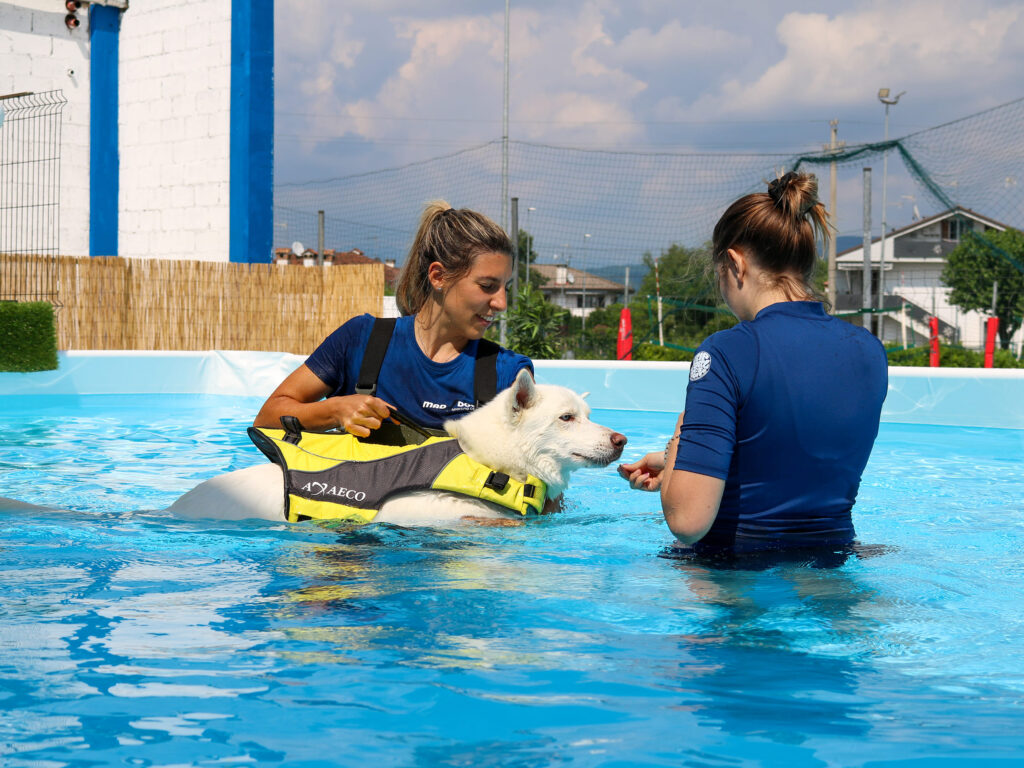
Some dogs are natural swimmers and jump right in. Others will need help learning to trust the water, and that’s completely normal!
When teaching your dog to swim:
- Reward every small step toward the water.
- Reinforce calm behavior in shallow areas first.
- Progress gradually, at your dog’s pace.
- Acquire a Dog Life Jacket to help make them feel safe.
Never force your dog into the water. Pushing them in can create fear or trauma that is difficult to undo.
If your dog ultimately doesn’t enjoy swimming, that’s okay. They may still love paddleboarding or kayaking. In that case:
- A properly fitted dog life jacket is essential.
- Keep your dog on a secure leash if needed.
- Stay close to shore.
- Avoid strong currents or deep, open water.
Safety always comes first.
2 – Desensitize Your Dog to the Equipment
If you plan to use a kayak, SUP, or boat, your dog must feel comfortable with it.
Break the process into small, manageable steps using positive reinforcement:
- Introduce the equipment on land.
- Let your dog explore it freely.
- Reward stepping onto it.
- Practice sitting or lying down on it before moving to water.
- Start in calm water (no waves, no current).
- Choose a location where your dog can walk onto the board rather than jump.
- Keep the first sessions short and positive.
- Take breaks during the outing.
Tutorial for SUP
IMPORTANT TIP: Inflate your SUP fully. An underinflated board is unstable and much harder for your dog to balance on.
3 – Prepare yourself
Your responsibility doesn’t stop at your dog’s comfort.
Before heading out:
- Check that dogs are allowed at the location
- Research local water conditions and regulations
- Understand potential dangers
- Bring the right gear for both of you
Being informed protects both your dog and your adventure!
Check the necessary gear and learn all safety rules for water adventures in our article “How to Safely Enjoy Water Adventures with Your Dog”.
Which dog breeds do better in water?
All breeds can enjoy water activities, though not always in the same way! High-energy dogs tend to love swimming, diving, and fetching toys in the water, while calmer dogs may prefer lounging on a boat deck.
Some breeds were specifically selected for water retrieving:
- Labrador Retrievers
- Golden Retrievers
- Newfoundlands
- Portuguese Water Dogs
- Lagotto Romagnolo
- Nova Scotia Duck Tolling Retrievers (Tollers)
- Poodles
Molossoids and sighthounds are generally weaker swimmers due to their morphology, but that doesn’t mean individual dogs can’t absolutely love the water!
Do keep an eye on brachycephalic breeds, as their shortened muzzles can make breathing, and therefore swimming, more difficult.
Conclusion
Sharing water activities with your dog is about much more than fun on the water. It’s an opportunity to build confidence, strengthen your bond, stimulate your dog’s mind, and create lasting memories together.
The key is always the same: safety first, positive reinforcement, and freedom of choice.
FAQ
Yes they can! If your dog doesn’t like to swim, you should first make sure they are at least able to swim short distances in case of an accident that causes them to fall off the board. Then you can stay close to the shore and avoid going too far out into open water. For safety, you should always equip your dog with a Dog life jacket, which can be a real lifesaver if they fall in.
Yes! Waves are far from the only reason to use a life jacket. Dogs can get tired or panicked even in calm lakes, and wearing a life jacket can save their life!
They usually have very thick, durable shells that dog nails alone are unlikely to damage. However, some light scratches may occur over time. To minimise this, you can trim your dog’s nails before heading out, and even file them into a rounded shape to reduce the risk of scratches.
A dog who truly enjoys the activity will jump onto the board without needing to be lured! Of course, in the beginning you can use treats and encouragement to help your dog understand that the board is a safe and a fun place to be.
This really depends on your individual dog, but you should definitely avoid long, continuous swimming sessions, as it is an extremely tiring activity and can lead to conditions such as “swimmer’s tail syndrome”. Make sure to take regular breaks for rest and hydration, and keep a close eye on your dog’s energy levels throughout the day.