
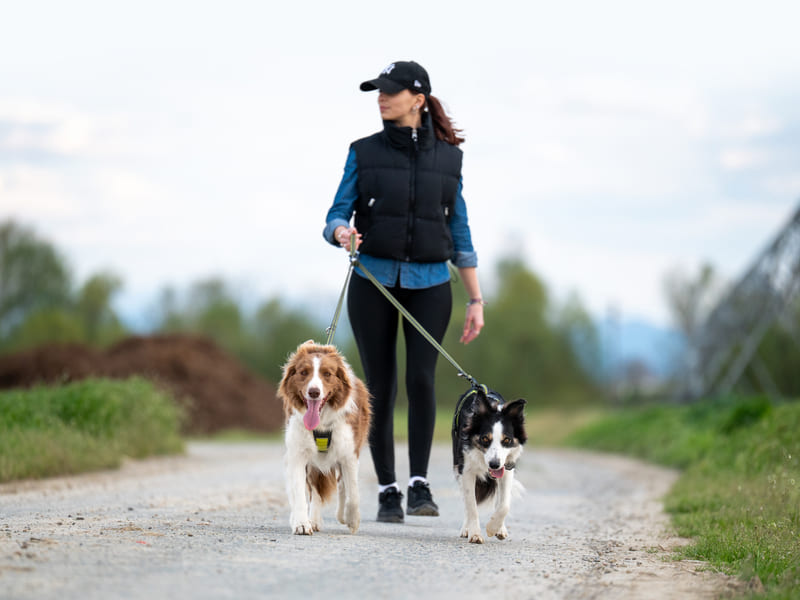
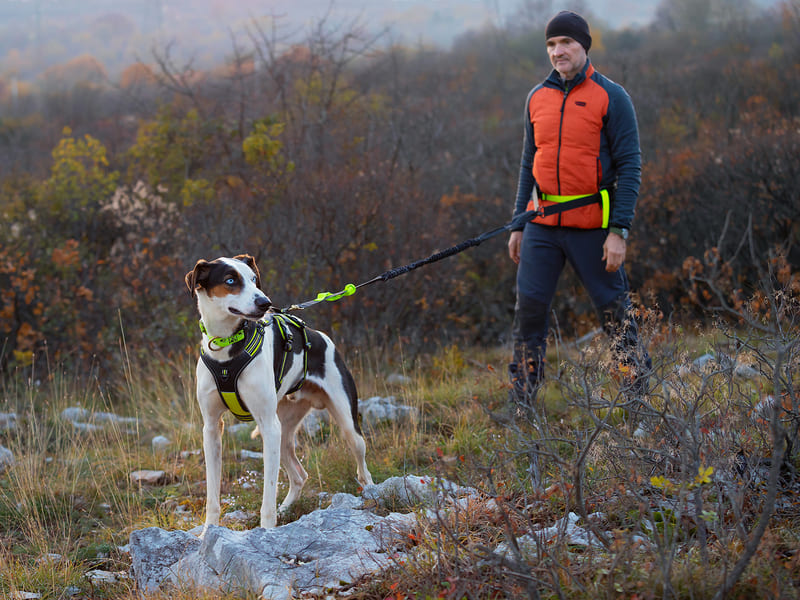
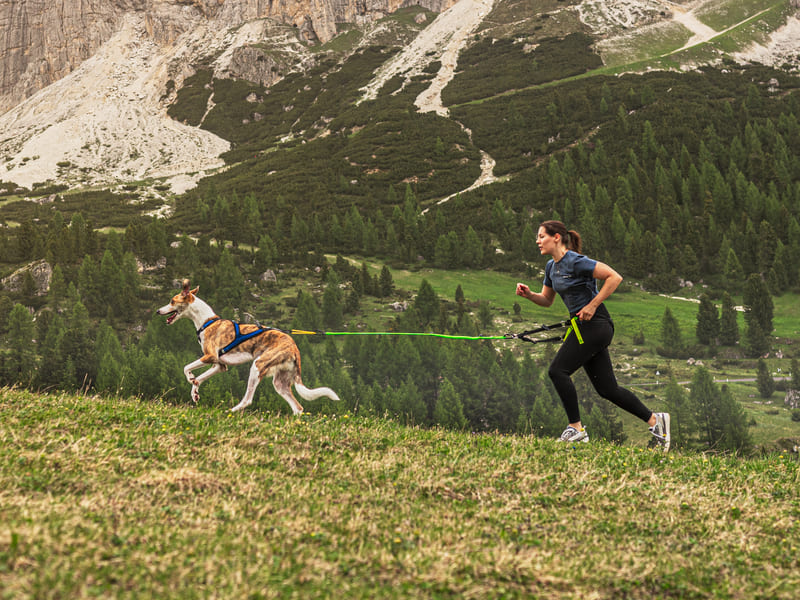
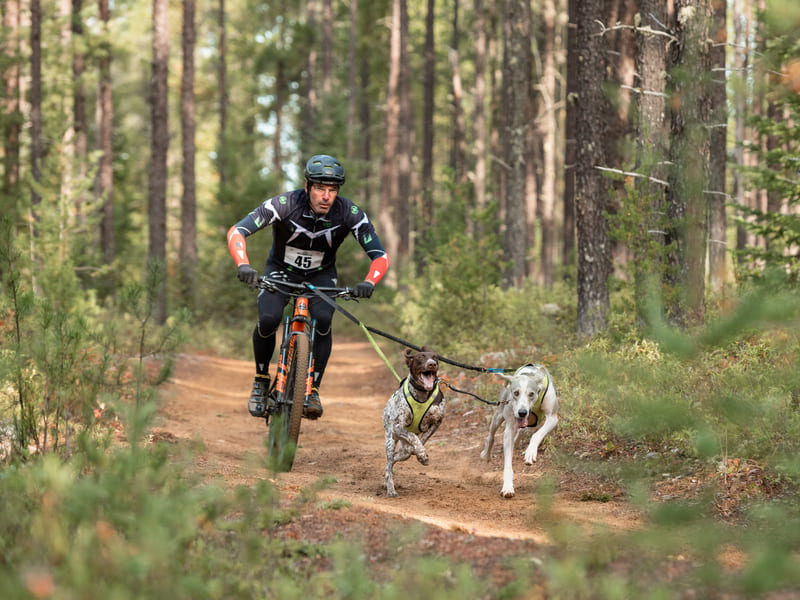
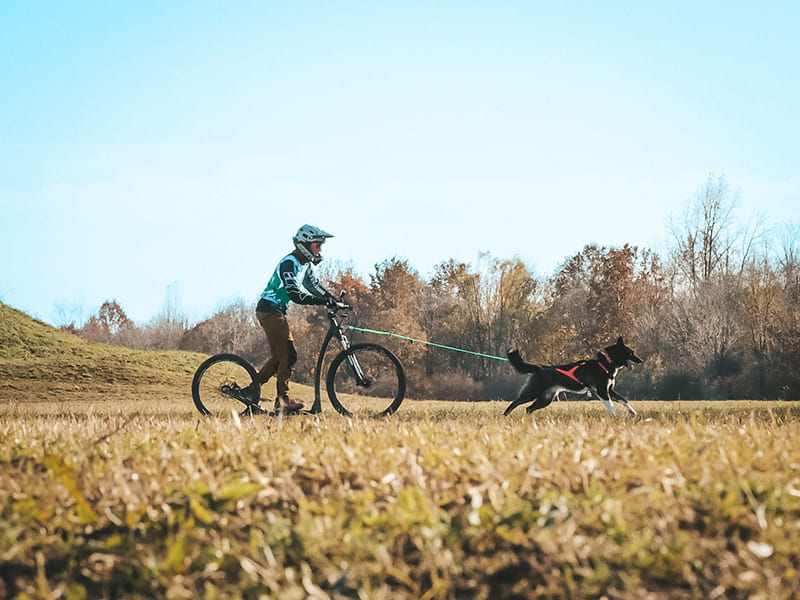
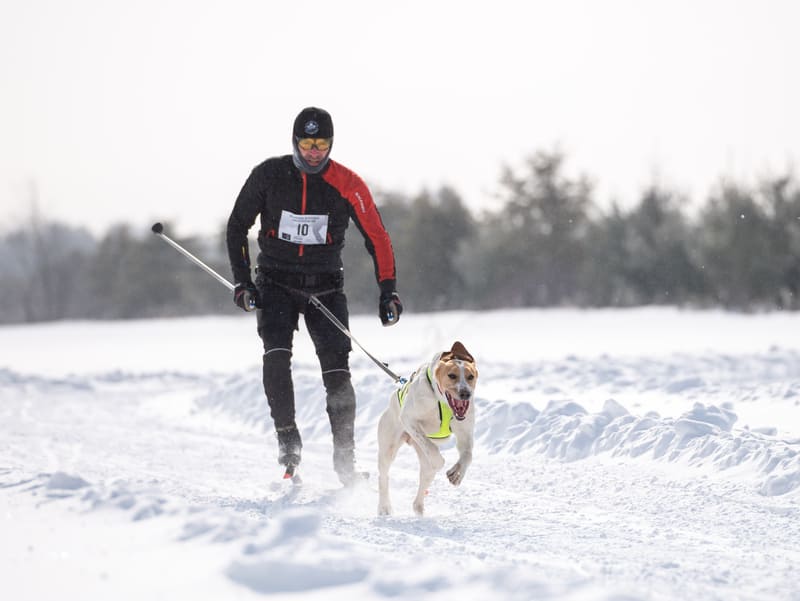
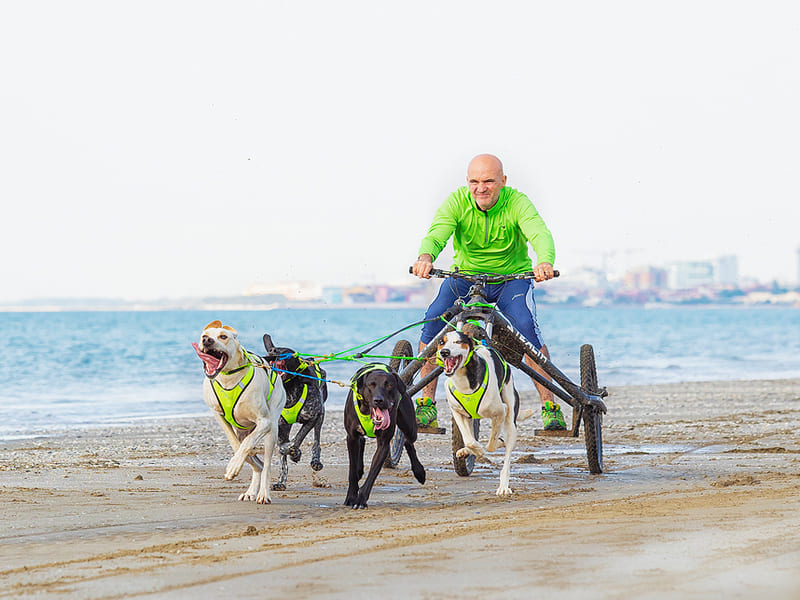
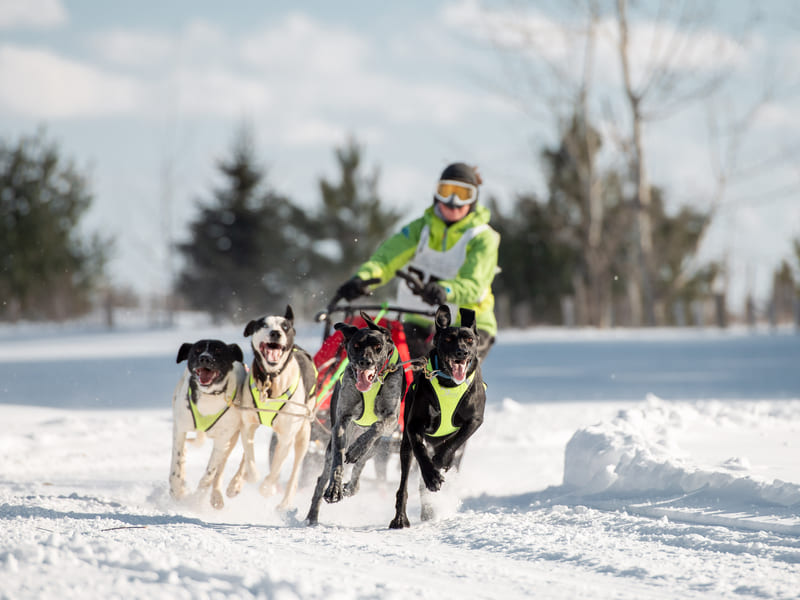
Pulling sports such as canicross, bike-joring and dog scootering are not just for “perfect dogs”, they’re also possible with reactive and anxious dogs!
We recently published an article entitled “Canicross as an Outlet: Physical Activity to Soothe Anxious and Reactive Dogs” (read here) that emphasizes how pulling sports can benefit anxious dogs by strengthening their bond with their human, building confidence, and increasing their receptiveness to training.
We understand that even when you are keen to try pulling sports, taking the first step with a sensitive or reactive dog can feel overwhelming. That’s why we’ve put together this article! We hope we can make the process easier for you by sharing helpful tips.
1. Choosing the Right Place
It is very important to explore potential locations beforehand, maybe start with just a simple walk there, to decide if they are right for your dog’s needs.
Look for a trail with the following characteristics:
- Not crowded
Public parks and popular tourist areas are generally not ideal. Instead, try to find places with minimal traffic, such as agricultural fields (with permission from the landowner if they are private), forest roads, or quiet rural paths. - Good visibility
Choose an area where you can easily spot other dogs, people, or other potential triggers from a distance. Avoid trails with numerous sharp turns, dense vegetation, or high obstacles that block your view. - Enough space
Even when you see others approaching, you won’t always be able to avoid them altogether. Wide trails give you room to safely pass, turn around, or keep a greater distance. Narrow paths can be challenging as sometimes when turning back you might find yourself trapped between two triggers.
2. Choosing the Right Time
The best time to avoid crowds is usually early in the morning or late evenings on weekdays. However, the biggest piece of advice we can give you is to visit your chosen spot at different times throughout the week, initially just for regular walks, so you can understand how busy that specific location tends to be before training there.
3. Use a Muzzle
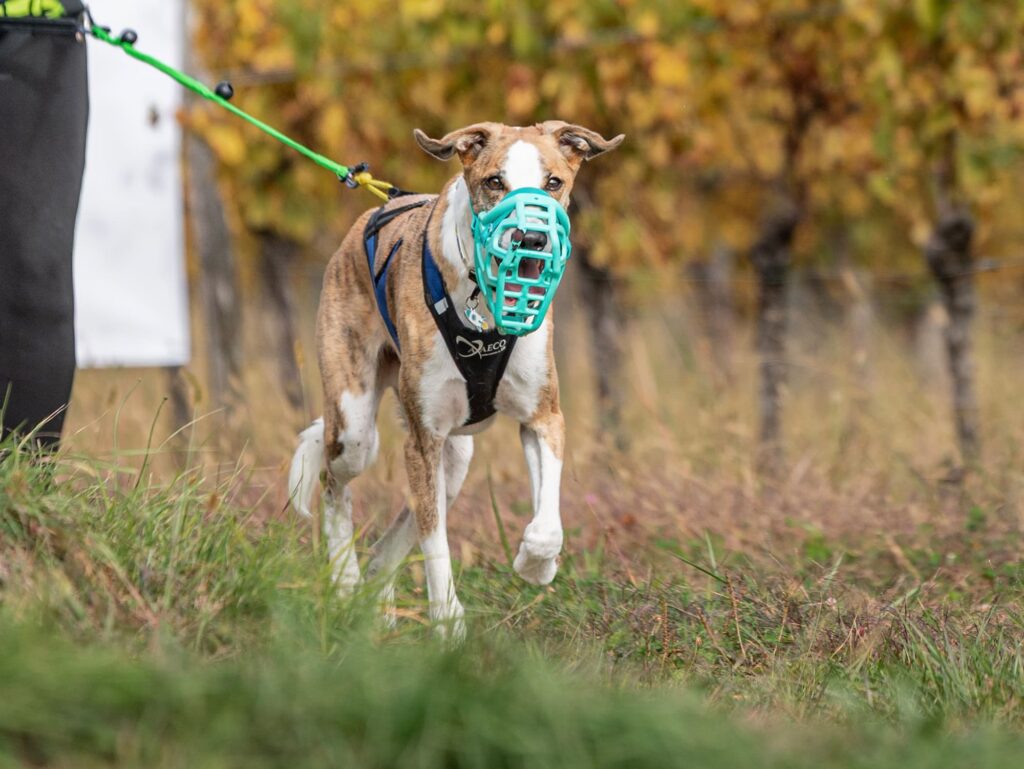
If your dog is a potential bite risk, always use a muzzle!
Even if you have taken all the precautions imaginable, it’s impossible to avoid unexpected situations or triggers completely.
Luckily, there are now excellent muzzle options that allow dogs to pant and carry out normal behaviours such as yawning, barking, and licking. Some muzzles even include openings for treats, and certain toys are designed to fit inside them, making rewards and distraction much easier.
4. Manage Your Expectations
When running with a sensitive dog, focus on the experience rather than on performance or records. Sometimes you will need to stop, turn around, or wait in order to avoid triggers your dog is not ready to handle. If you’re not aiming for specific performance goals or times from the start, these adjustments feel much less frustrating.
You should also come to accept that competitions might not be for you or that there is no rush to compete, if your dog is uncomfortable around unfamiliar dogs, people, or loud noises. Even if your dog is a champion at heart, no title is worth compromising their confidence, training progress, or overall wellbeing.
However, if you are seeing progress and are determined to compete, remember that you may be able to request certain accommodations from event organizers if you inform them in advance that your dog is sensitive. For instance, you may be allowed to start last, or begin with a specific group that your dog is already comfortable with, or with a group that doesn’t trigger their reactivity if they’re only reactive to certain types of dogs.