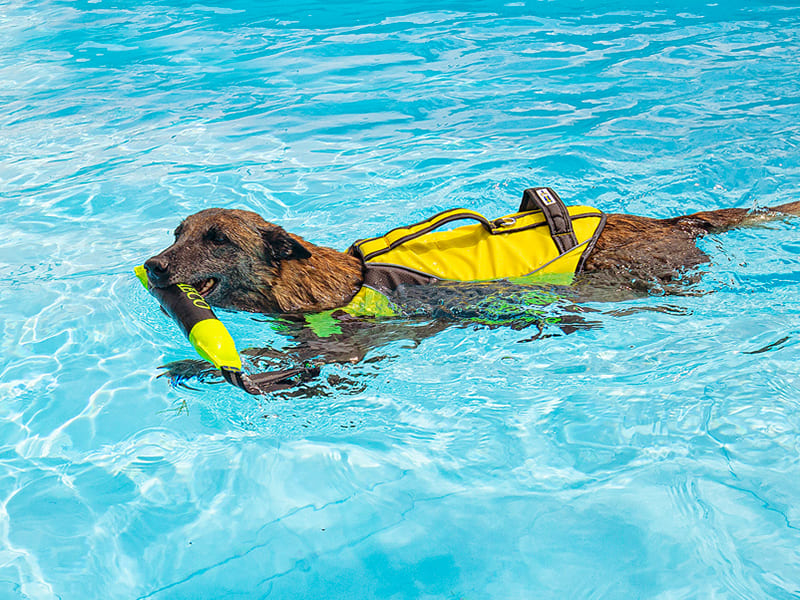
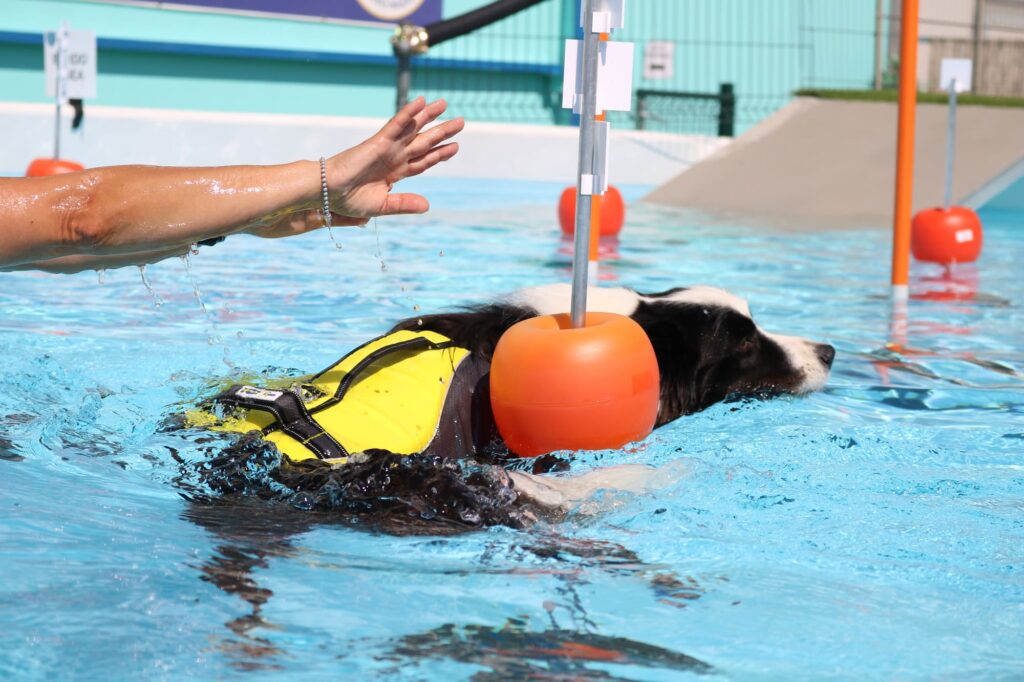
“Swim Dog Sports” combine three different activities for you and your dog in a swimming pool.
- Freestyle: dogs navigate obstacles and perform tricks with the help of their handler in the pool
- Speedwater: dogs are lead by their handler through an obstacle course in the pool and have to retrieve a toy
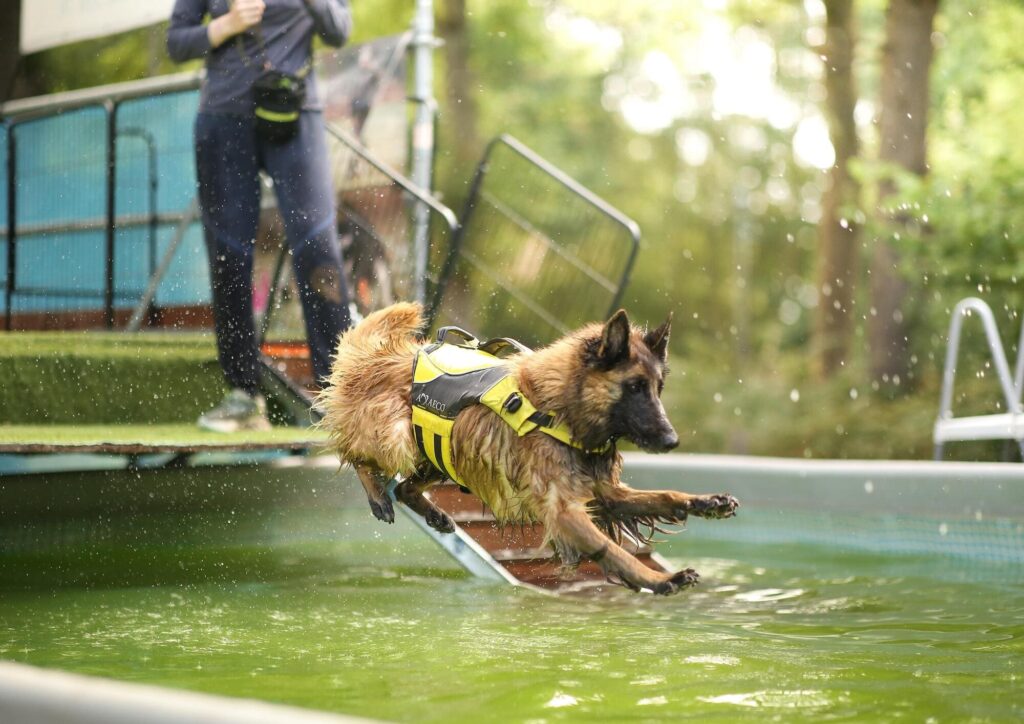
- Splashdog: dogs jump from the dock as far as possible into the pool
Splashdog has been a popular sport worldwide for a number of years, while Freestyle was first invented in Italy in 2011. This group of sports known collectively as “Swim Dog Sports”; only became official in 2015 when Speedwater, an offshoot of Freestyle, was first introduced.
Dog sports that involve swimming are amazing for all dogs no matter what their breed, age, or physical condition! However, swim dog competitions are not open to:
- Dogs under one year of age
- Females in heat, pregnant, or lactating
- Wounded or sick dogs
- Dogs with aggressive or problematic behaviour towards humans or other dogs
Remember, though, that this last rule only applies to competitions. Sensitive or reactive dogs might find the presence of so many people and excited pups at these events too stressful but that doesn’t mean that “Dog Swim Sports” aren’t for them: they may love doing some individual training sessions.
Swimming has great health benefits for dogs: it’s a low-impact activity that doesn’t strain joints and works many muscles in the body, including the heart, the most important muscle to keep strong!
Freestyle and Speedwater
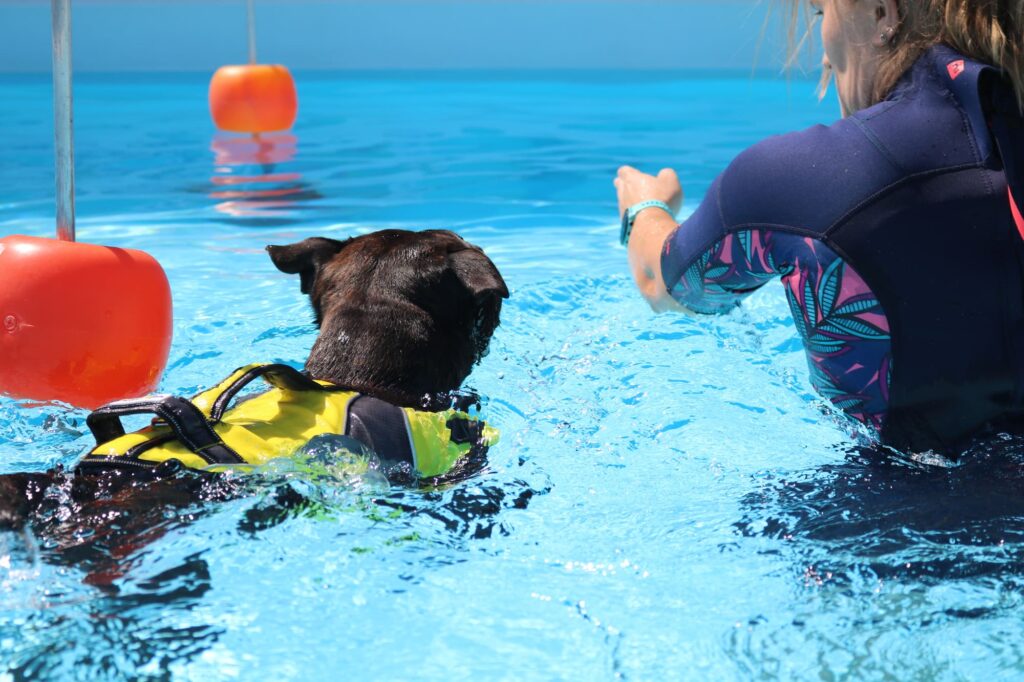
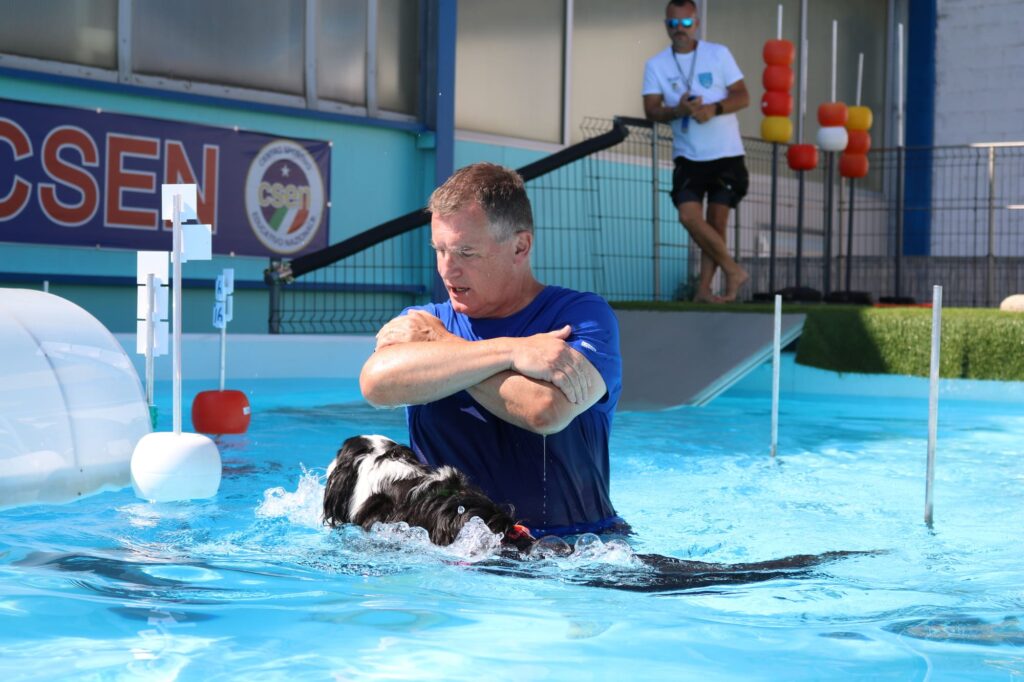
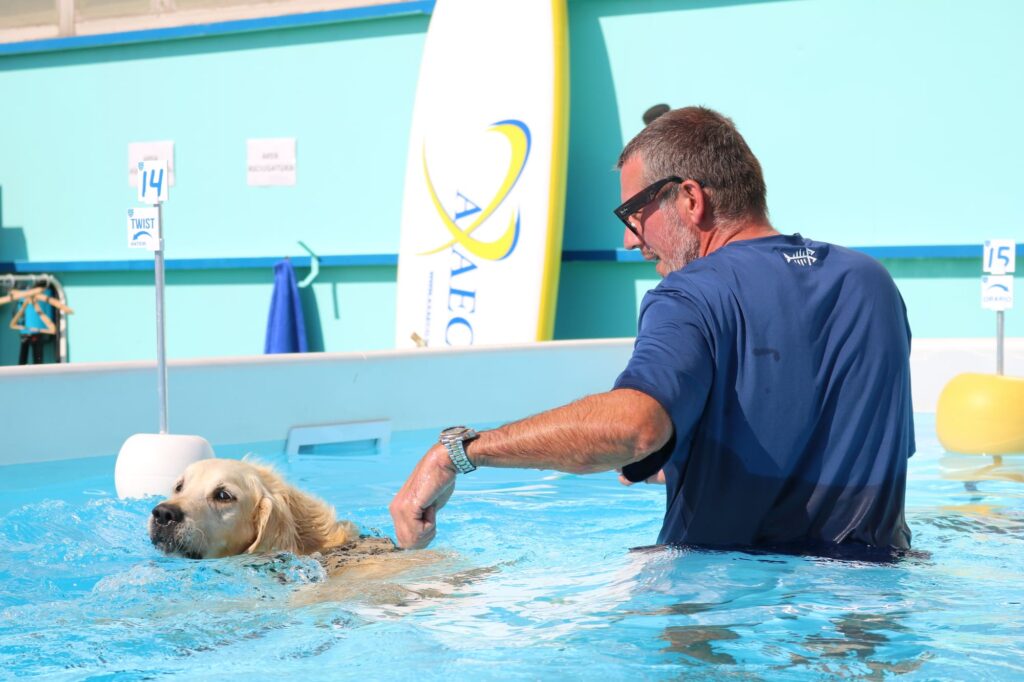
Freestyle and Speedwater are essentially a dog agility course in water! Dogs swim through obstacles in the pool, following vocal cues and hand signals from their owners.
Working as a team helps dogs and handlers build a strong relationship, making these sports ideal for anyone who wants to deepen their bond with their dog. Importantly, handlers are not allowed to touch their dogs during the course to ensure that dogs are not being forced to participate. If a dog decides to swim back to the dock, that choice is respected. Handlers are also prohibited from using reinforcers such as toys or treats to get their dog to complete the course, and must rely purely on the dog’s love of swimming and willingness to collaborate as motivation. Teams can be disqualified if the handler shows any form of aggression toward the dog, including verbal.
For safety reasons, dogs must wear either a harness or a life jacket. Collars and tags are not allowed.
Dogs can compete in different classes based on their level: Training, Junior, Senior, or Veteran. The higher the level, the more challenging the course is!
Dogs move from Junior to Senior after successfully completing a certain number of courses in the Junior class. Seniors tackle longer courses with more complex obstacles.
The Veteran class is for dogs aged 10 and over, and they follow the same type of course as Juniors.
Interestingly, a dog can compete in two classes at the same time if it has two different handlers, as it is the team who is assigned to a certain class not the individual dog or handler.
Depending on their level, dogs will be asked to go through between 12 and 18 obstacles. The goal is to finish the course as quickly as possible, mistakes may result in penalties or even disqualification. Each course has a maximum time limit of 3 minutes and allows up to 4 penalties.
In the Senior class, not only are there more obstacles, but they are also more challenging. For example, dogs may be required to navigate around obstacles independently, guided only by voice commands.
In competitions, dogs are also divided into different size classifications: Small, Medium and Large:
- Small: dogs up to 35cm at the withers
- Medium: dogs from 35,1 to 44 cm at the withers
- Large: dogs over 44,1 cm at the withers
While freestyle and speedwater have many things in common, they are two different sports. The main differences are the following:
- In Freestyle, the dog may also be required to perform tricks without obstacles, such as doing the “shark” (swimming around their handler) or a “giro” (turning 180 or 360 degrees on its own).
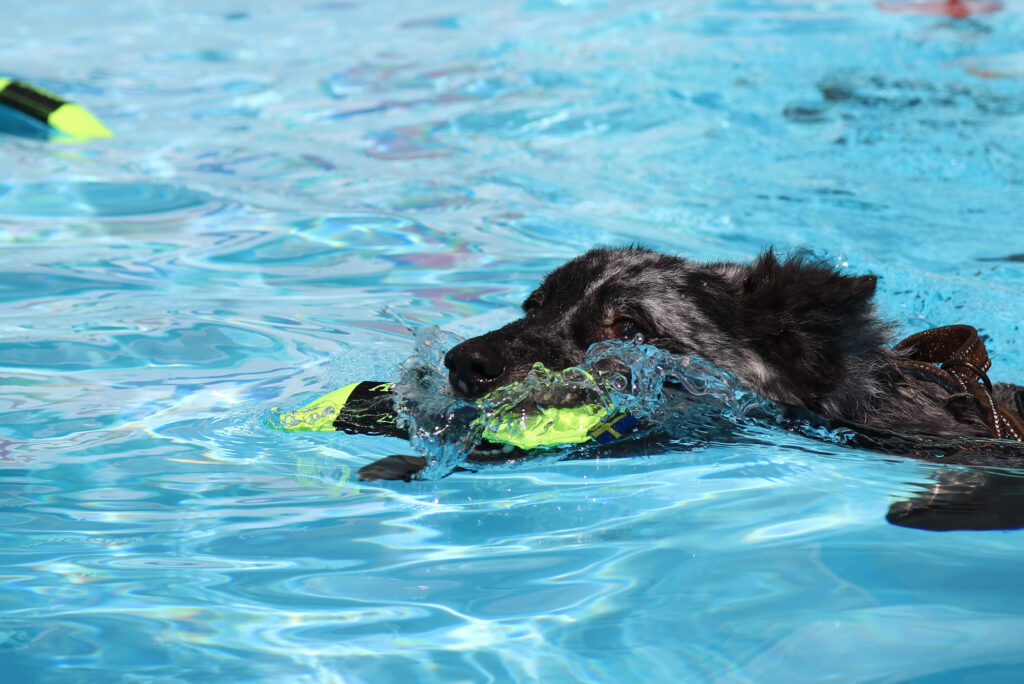
- Speedwater courses, on the other hand, end with the dog retrieving a toy, such as our Pippen Mini, which we designed specifically for this sport.
Seniors are asked by the course judge to retrieve one of two toys, either one on the right or on the left, and then avoid all the obstacles on their way back to the dock. Juniors and veterans just need to grab the single toy available and return to the dock. This may sound simple but it is actually pretty challenging as the toys are positioned before the final obstacle, which often proves too tempting for dogs who fetch the toy early instead of completing the course. Plus there are also some dogs who have absolutely no interest in retrieving the toy, or who struggle to hold onto the toy and may drop it too soon.
In both sports, there are 4 different types of obstacles:
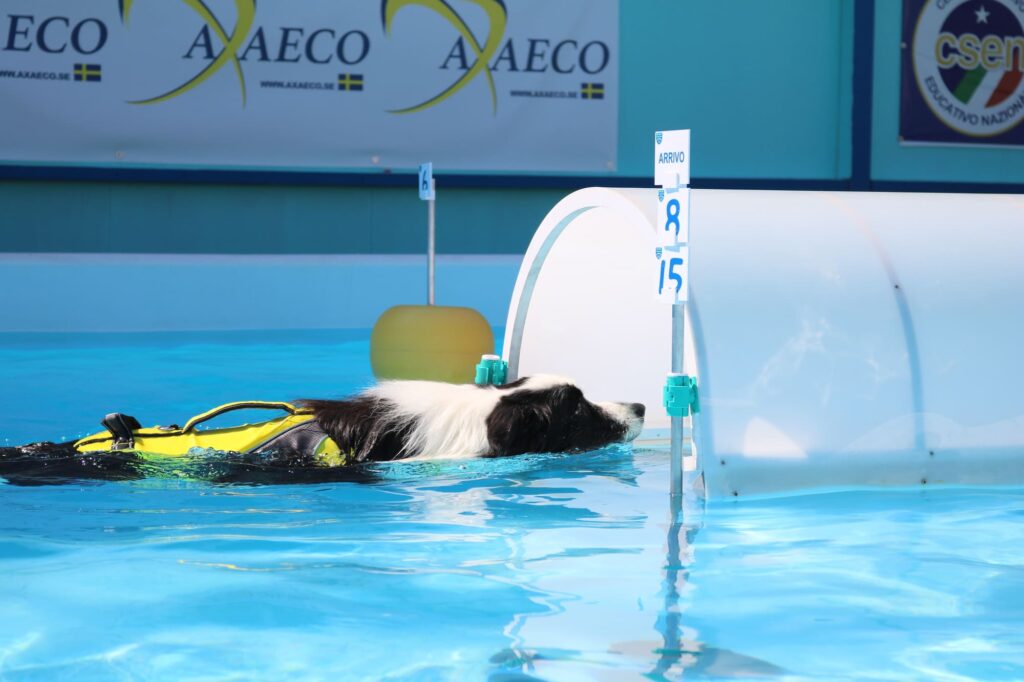
Tunnel
You’ll hear most handlers call “Tuuuubo” when their dog needs to go through one!
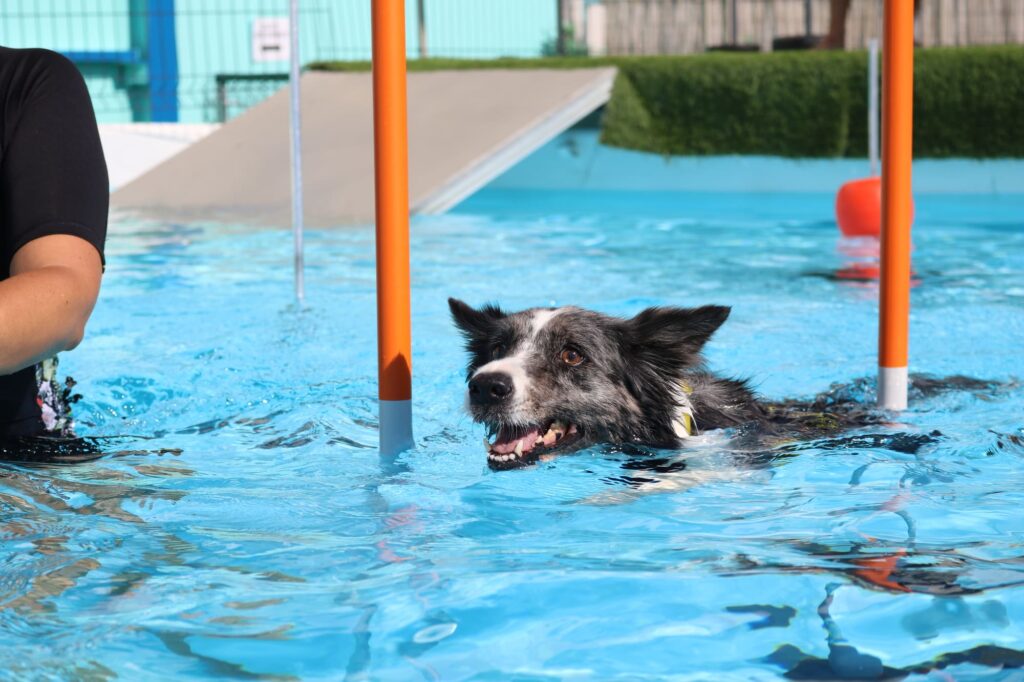
Slalom
Only highly trained dogs can do this using the single word “slalom” command. Most handlers guide their dog through each “gate” using the words “vai” and “vieni” (“go” and “come” in Italian).
Buoys
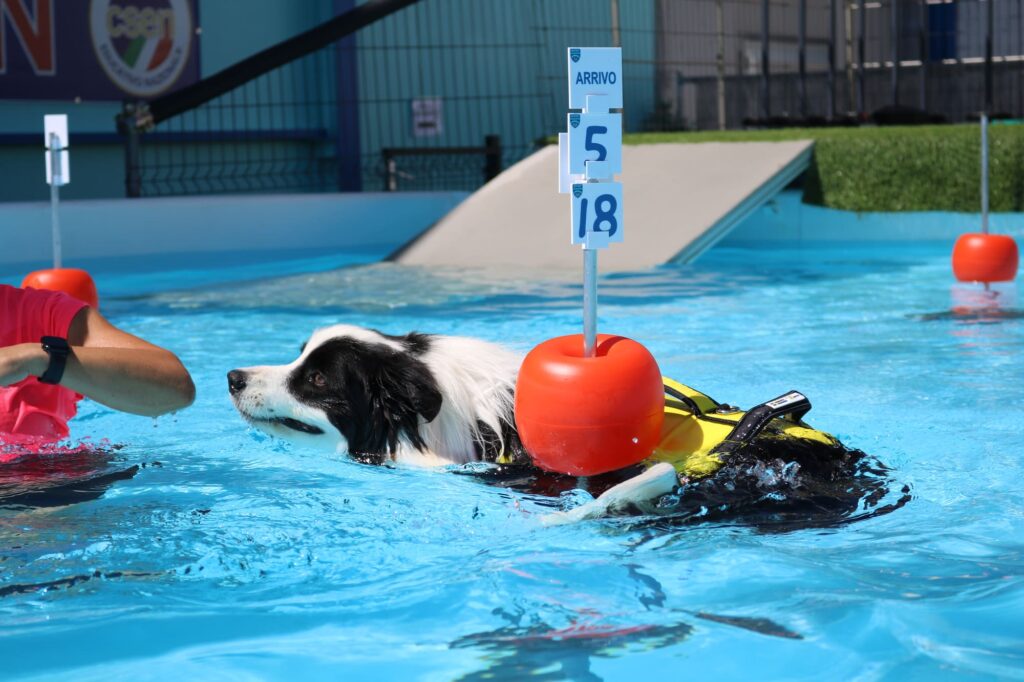
Dogs are asked to go around buoys using three different commands:
- “Boa“: the dog goes around a single yellow buoy and returns.
- “Doppia“: the dog goes around two yellow buoys and returns.
- “Gira“: the dog turns around a buoy.
Gomma
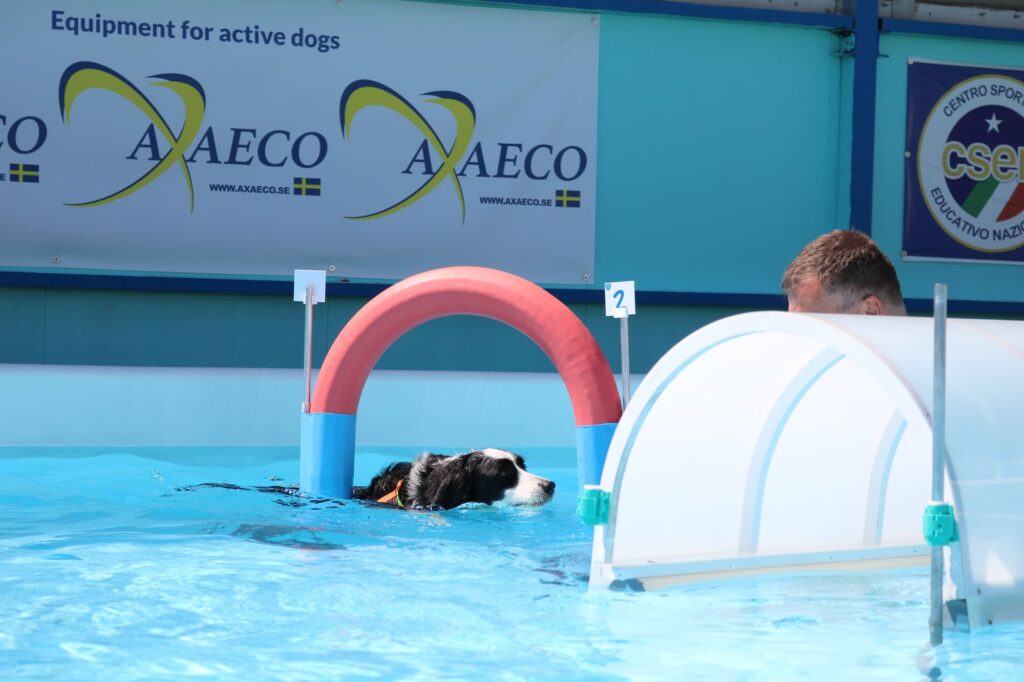
Dogs navigate the arch in two ways: either by swimming forward and going through it, or by being asked by their handler to go around it and then return through it.
All these obstacles and different ways of using them make for really awesome mental stimulation!
Splashdog
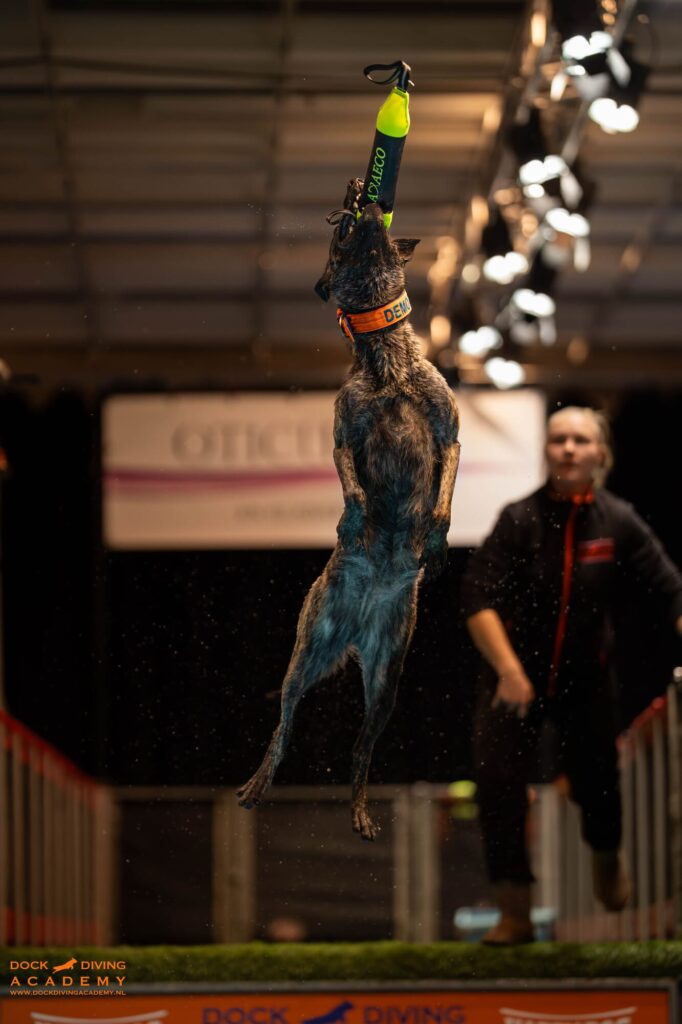
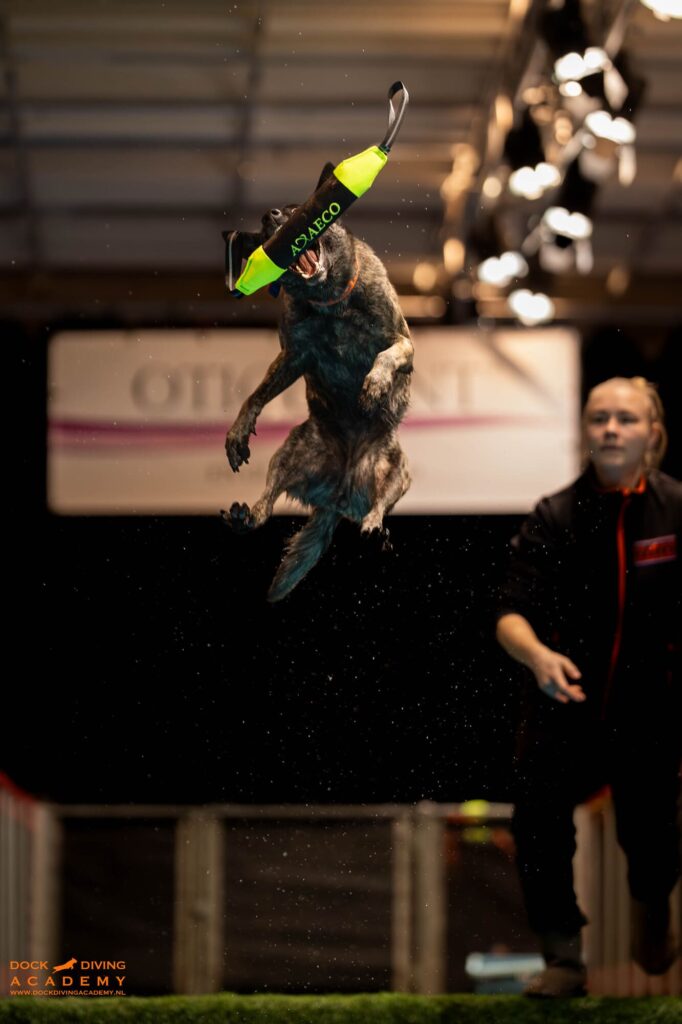
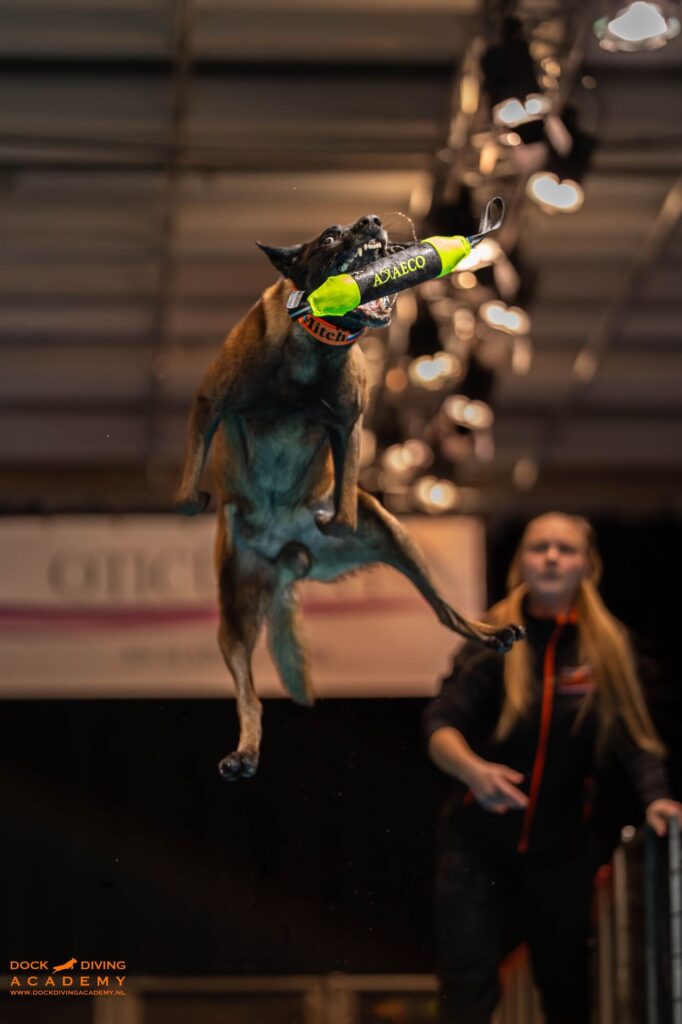
Known throughout the world as dock diving, this sport consists of the dog jumping in the pool at the handler’s signal. The goal is to land as far as possible from the dock.
The pool is equipped with a long dock and a measuring tape along the side to record each dog’s performance.
During competitions, each dog is allowed two dives, with only their best result counting for the final classification. If two dogs have the same result, their second dive is compared. If there is still a tie, an additional dive determines the winner.
Handlers can use any floating toy to motivate their dog, but physically forcing the dog, for example, by pushing or touching them to make them jump, is strictly prohibited.