

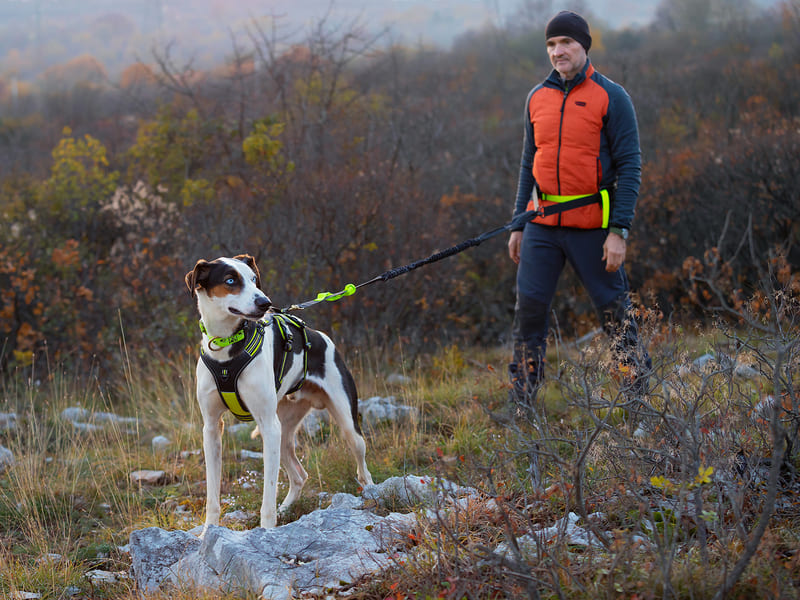
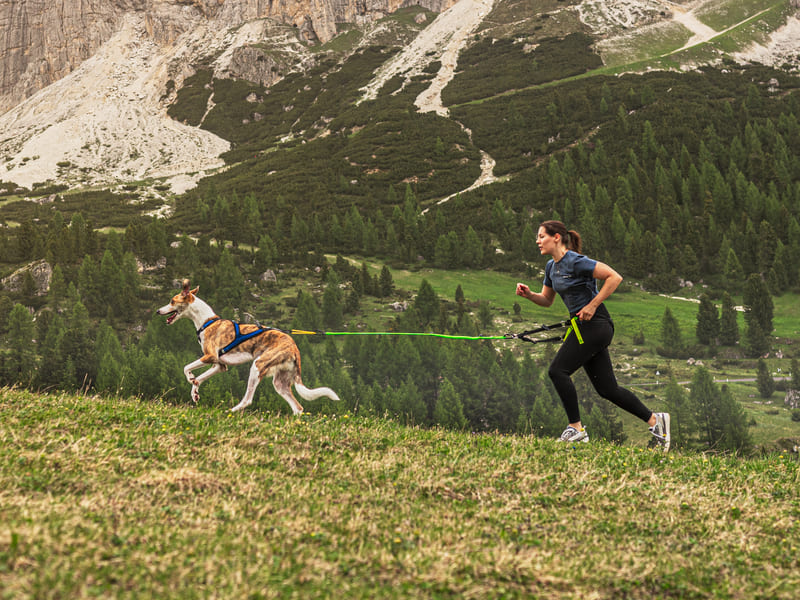
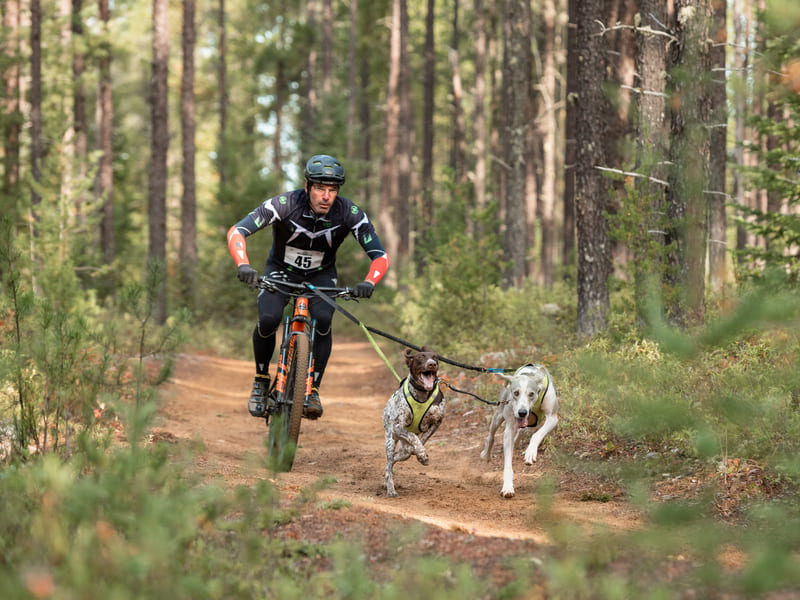
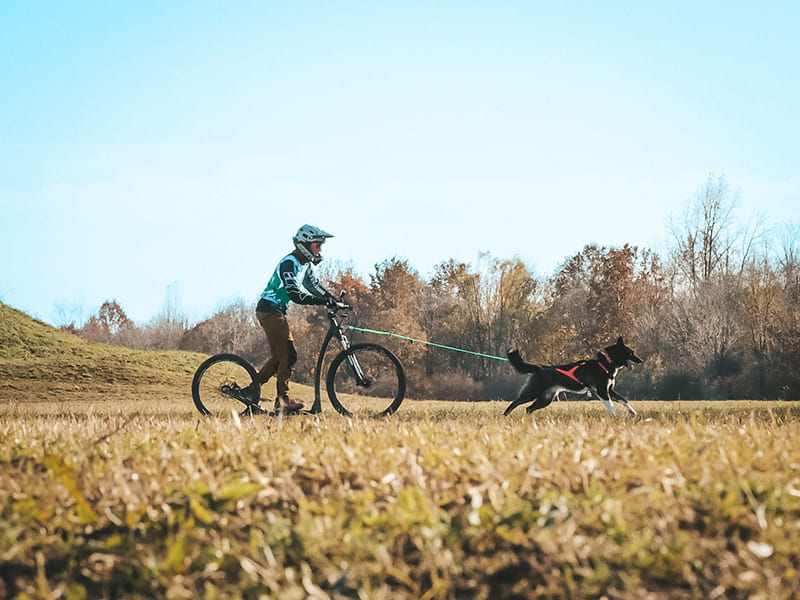


A harness is an essential for your dog’s safety and comfort when out on walks, but it can also become a source of anxiety and discomfort if it’s introduced incorrectly. For many dogs, the standard approach: putting their harness on all in one go without warning, can cause stress or even avoidant behaviours. Following a few simple steps can help your dog start to see putting on their harness as something positive.
Here is how to gently introduce a harness, with respect and kindness:
1. Associate the harness with positive experiences
Before you even think about putting the harness on your dog, start by shifting their perception of it. Too often, harnesses are presented as a purely functional tool, when they should, instead, be linked to enjoyable things: e.g. walks, play, treats…
To do this:
- Show the harness → give a treat.
- Place it on the floor → scatter a few treats around it.
- Touch it, move it → reward.
Repeat this short ritual several times over a few days. The goal is simple: when your dog sees the harness, they should be thinking: “Great, something fun is about to happen!”.
2. Let the dog put their head through it on their own
A common mistake is to force the dog’s head into the harness. In reality, it’s much more effective to let your dog do the movement by themselves.
You can try:
- Holding the harness open, with a treat in your hand on the other side of the neck opening.
- Waiting for the dog to put their head through to reach the treat.
- Rewarding every attempt, even if not fully successful.
Don’t rush it! Sometimes your dog will just bring their nose close to the opening and then step back, that’s already progress. Be patient, repeat, and above all, let the dog choose to interact. This builds trust.
If this step is particularly difficult for your dog, you can also try fully unclipping the neck strap to see if that makes things easier.
3. Keep your dog relaxed
Throughout the process, pay close attention to your dog’s emotional state. They should remain calm, curious, and comfortable. If they tense up, back away, or avoid the harness, you’re moving too fast.
Signs of relaxation include:
- Taking treats without hesitation.
- Moving forward on their own.
- Offering behaviours (sitting, looking at the harness, etc.).
If your dog isn’t progressing, simply go back to an easier step. It’s better to take your time than risk creating a negative association with the harness.
4. The feel of the harness: a sensory learning experience
For some dogs, simply feeling an object on their body can be uncomfortable. Take time to help them get used to the sensation:
- Gently touch their back, belly, and legs with your hands.
- Do the same using the harness.
- Softly slide the strap under their belly without fastening it.
- Reward every small moment of contact.
Your dog needs to understand that each step is predictable, pressure-free, and leads to something positive.
5. The clips: a sound to get used to
The clicking sound of the harness clips can frighten some dogs. To help your dog adapt:
- Practice clipping and unclipping the harness a few steps away from the dog, pairing each click with a treat.
- Gradually move closer as their comfort increases.
- When they’re ready, clip the harness gently while continuing to reward.
6. Duration: increase gradually
Once the harness is on, don’t head out for a walk right away. If your dog isn’t fully comfortable, stay at home for a few minutes and let them enjoy an easy, pleasant activity such as:
- Chewing
- Calm play
- Simple tricks they already know
The goal is to remove any pressure and help your dog associate wearing the harness with positive, relaxed moments.
Practical tips
- Repeat each step several times calmly before moving on to the next stage.
- Keep sessions short (around 5 minutes).
- Always pay close attention to your dog: let their body language guide you.
- Don’t try to “go all the way” every time: sometimes stopping at step 2 and ending on a positive note is far more beneficial.
And what about other accessories?
Use the same approach: follow simple steps, go at your dog’s pace, and give them time to adjust and enjoy the process.
What if this doesn’t work?
Rewiring your dog’s brain to change something scary into something enjoyable takes time! For some dogs, the process may take 2 days, for others, 2 months. Adapt to your dog’s rhythm and make sure they fully master one step before moving forward.
If your dog struggles significantly, don’t hesitate to reach out to a professional dog trainer for support.
Also, if your dog shows signs of discomfort relating to the harness, it’s essential to investigate any potential underlying health issues, especially possible back pain, by consulting your vet or an osteopath.
Conclusion
Putting on a harness might, at first appearances, seem to be a trivial act: but in reality it’s a moment of contact, cooperation, and sometimes vulnerability. It should always be approached with consent, patience and positivity!
Written by
Lucie Cherrier
Dog behaviourist